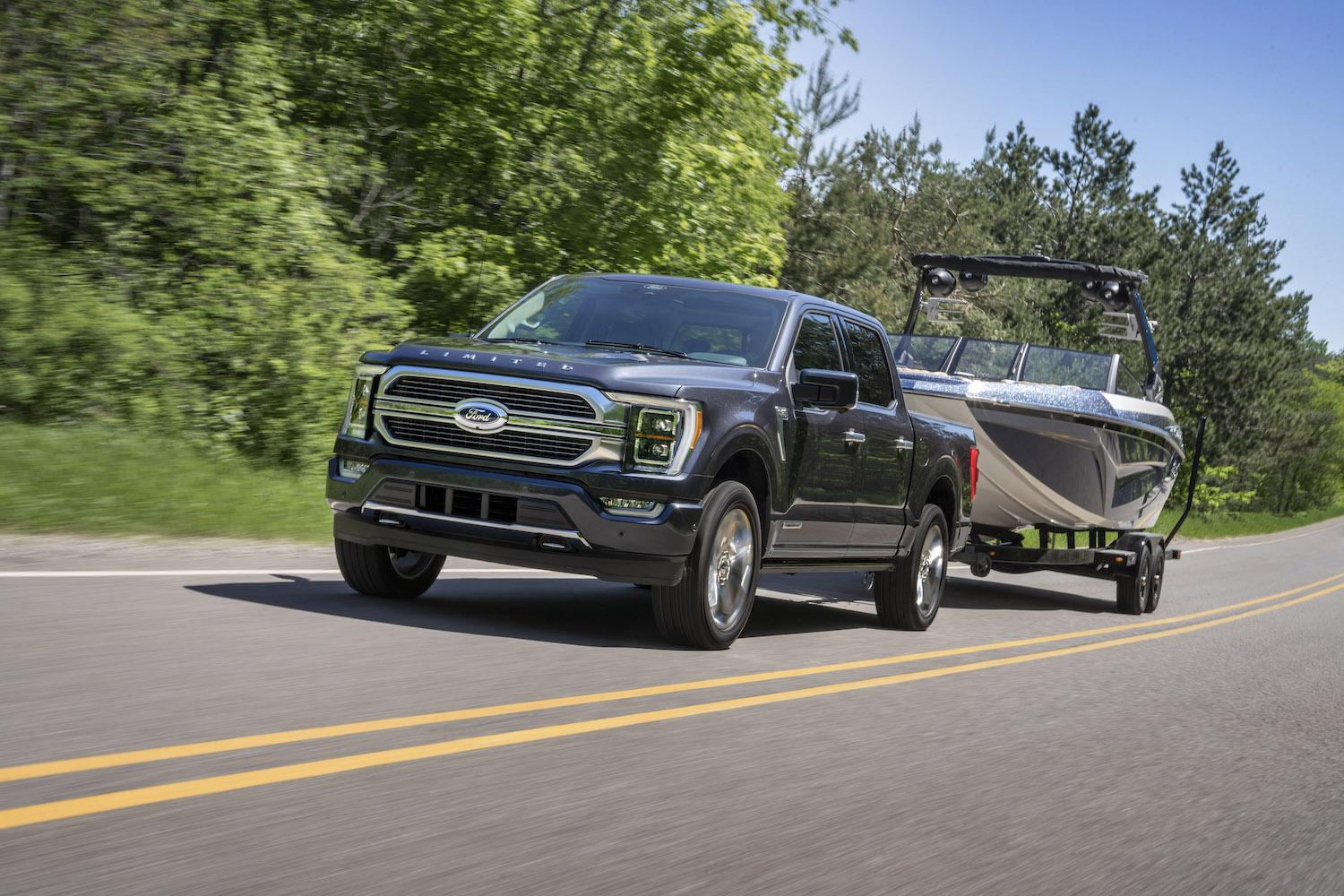
The 2026 Ford F-150 remains one of the most versatile full-size pickup trucks available in America. It combines a wide range of engines, multiple cab and bed configurations, serious towing and payload capability, modern technology and versions designed for everything from basic work duties to luxury travel and off-road driving.
But the full-size pickup market has become extremely competitive. The Ram 1500, Chevrolet Silverado 1500, GMC Sierra 1500 and Toyota Tundra all offer strong alternatives. So the important question is not simply whether the F-150 is capable. It is whether the 2026 model still gives American truck buyers the best overall combination of capability, practicality, technology and everyday usability.
Introduction: Why the Ford F-150 Still Matters
The Ford F-150 is not simply another pickup truck. It has become one of the defining vehicles of the American automotive market.
For generations, the F-150 has been used as a work truck, family vehicle, towing machine, commuter vehicle, recreational vehicle and even a mobile workplace. That broad range of uses is one of the main reasons the F-150 has remained so important to Ford and to American truck buyers.
The 2026 F-150 continues that philosophy. Instead of offering one version designed for everyone, Ford provides a remarkably broad lineup. Buyers can choose from several engines, cab configurations, bed lengths, drivetrain options and trim levels.
That flexibility is a major strength, but it can also make the F-150 confusing to shop for. The truck’s capability depends heavily on configuration, and the most expensive F-150 is not automatically the best F-150 for every buyer.
This detailed BLOG4CARS review looks at what the 2026 Ford F-150 offers, how its engines compare, how much it can tow and carry, which features matter, what its weaknesses are and which version makes the most sense for different types of owners.
What Is the 2026 Ford F-150?
The 2026 Ford F-150 is a full-size pickup truck offered in several configurations for work, personal transportation, towing, hauling, luxury use and off-road driving.
Ford offers Regular Cab, SuperCab and SuperCrew configurations, with bed lengths that vary depending on cab style. The SuperCrew is particularly popular with buyers who need a pickup that can function as both a work vehicle and a family vehicle.
The 2026 lineup includes XL, STX, XLT, Lariat, King Ranch, Platinum, Tremor and Raptor versions. Each has a different purpose and equipment level.
At the lower end, the XL focuses on useful capability and work-oriented value. Higher trims add increasingly sophisticated interiors, technology and convenience features. Tremor is designed for off-road use, while Raptor takes the performance and off-road concept much further.
2026 Ford F-150 Engine Options
One of the F-150’s greatest strengths is its engine variety. Ford offers different powertrains because truck buyers have very different requirements.
2.7-Liter EcoBoost V6
The 2.7-liter EcoBoost V6 is rated at 325 horsepower and 400 lb-ft of torque in Ford’s 2026 specifications.
This engine is an attractive choice for buyers who want a full-size truck without stepping up to one of the larger engines. It uses twin turbochargers to produce substantial torque from a relatively small engine.
For everyday driving, commuting and moderate towing, the 2.7-liter EcoBoost can provide a useful balance between power and efficiency.
Ford lists up to 8,400 pounds of available towing capability with the 2.7-liter engine when properly configured.
3.5-Liter EcoBoost V6
The 3.5-liter EcoBoost is the engine to consider when maximum conventional towing is a priority.
Ford’s 2026 towing guide lists the 3.5-liter EcoBoost at 382 horsepower and 500 lb-ft of torque, with a maximum available conventional towing rating of 13,500 pounds in qualifying configurations.
That does not mean every F-150 with this engine can tow 13,500 pounds. Cab configuration, drivetrain, axle ratio, options, payload and trailer equipment all influence the actual rating.
5.0-Liter Ti-VCT V8
The 5.0-liter V8 provides 400 horsepower and 410 lb-ft of torque according to Ford’s 2026 specifications.
For some truck buyers, the V8 remains appealing because of its traditional power delivery, sound and familiar character.
It also provides serious towing capability. Ford lists a maximum available tow rating of up to 12,800 pounds for qualifying configurations.
The V8 can therefore make sense for buyers who want a conventional naturally aspirated gasoline engine rather than a turbocharged V6 or hybrid system.
3.5-Liter PowerBoost Full Hybrid V6
The PowerBoost combines a twin-turbocharged 3.5-liter V6 with an electric motor and hybrid battery system.
For 2026, Ford’s towing guide lists the PowerBoost at 420 horsepower and 570 lb-ft of torque.
The hybrid can tow up to 11,600 pounds in qualifying configurations. That is less than the maximum available rating of the 3.5-liter EcoBoost, but the PowerBoost has another major advantage: integrated electrical power capability.
With the appropriate Pro Power Onboard equipment, the F-150 can provide substantial electrical output through outlets in the truck. This can be useful at a work site, campsite or during certain recreational activities.
High-Output 3.5-Liter EcoBoost
The high-output 3.5-liter EcoBoost is associated with the performance-focused Raptor models rather than the ordinary work-oriented F-150 lineup.
It produces substantially more performance than the mainstream engines and is designed for drivers who prioritize high-speed off-road capability.
This is an important distinction: the Raptor should not be treated simply as a more expensive work truck. It is a specialized performance pickup with a different purpose.
5.2-Liter Supercharged V8
The 5.2-liter supercharged V8 is reserved for the high-performance F-150 Raptor R.
It is designed for extreme performance rather than fuel-efficient daily transportation or maximum conventional towing.
For the majority of F-150 buyers, this engine is unnecessary. For enthusiasts who want one of the most aggressive factory-built pickups available, however, it occupies a very different category.
2026 F-150 Engine Comparison
| Engine | Power | Torque | Max Available Towing | Best Suited For |
|---|---|---|---|---|
| 2.7L EcoBoost V6 | 325 hp | 400 lb-ft | 8,400 lb | Daily driving and moderate towing |
| 3.5L EcoBoost V6 | 382 hp | 500 lb-ft | 13,500 lb | Heavy conventional towing |
| 5.0L V8 | 400 hp | 410 lb-ft | 12,800 lb | Traditional V8 buyers and towing |
| 3.5L PowerBoost Hybrid | 420 hp | 570 lb-ft | 11,600 lb | Power, towing and onboard electricity |
| High-Output 3.5L EcoBoost | 450 hp | 510 lb-ft | 8,200 lb | Raptor performance and off-road driving |
| 5.2L Supercharged V8 | 720 hp | 640 lb-ft | 8,700 lb | Raptor R performance |
Maximum ratings depend on configuration, equipment and other conditions. Engine specifications and towing figures should be verified against the exact vehicle and current Ford towing documentation before purchase.
How Much Can the 2026 Ford F-150 Tow?
Towing is one of the primary reasons people buy a full-size pickup, and the F-150 offers serious capability.
Ford lists a maximum available conventional towing rating of 13,500 pounds for properly equipped F-150 configurations using the 3.5-liter EcoBoost V6.
The 5.0-liter V8 can reach up to 12,800 pounds, while the PowerBoost Hybrid can reach up to 11,600 pounds. The 2.7-liter EcoBoost is rated up to 8,400 pounds in qualifying configurations.
These numbers are impressive, but towing safely is about much more than engine power.
What Affects Towing Capacity?
- Engine selection
- Cab configuration
- Bed length
- Two-wheel drive or four-wheel drive
- Axle ratio
- Trailer equipment
- Payload carried inside the truck
- Passengers and cargo
- Trailer tongue weight
- Available towing packages
A truck carrying a heavy load in the cab and bed has less available capacity for trailer tongue weight. This is why buyers should consider the complete combination rather than looking at the maximum tow rating alone.
Payload: How Much Can the F-150 Carry?
Payload is different from towing capacity.
Towing capacity refers primarily to the weight of the trailer the truck is rated to pull. Payload refers to the weight the truck itself can carry, including passengers, cargo and certain trailer-related loads such as tongue weight.
Ford lists a maximum available F-150 payload of 2,440 pounds for qualifying configurations.
That figure can change substantially depending on configuration. A luxury-oriented truck with additional equipment may have a different payload rating from a relatively light work-oriented model.
Why Payload Matters
Imagine a family using an F-150 to tow a travel trailer. The trailer may be within the truck’s maximum tow rating, but the passengers, luggage, tools and trailer tongue weight still count toward the truck’s payload.
Ignoring payload can result in an overloaded vehicle even when the trailer appears to be within the advertised towing limit.
What Is Pro Power Onboard?
Pro Power Onboard is one of the F-150’s most useful features for people who use their truck as a mobile workspace or recreational vehicle.
Instead of relying only on a traditional portable generator, appropriately equipped F-150 models can provide electrical power through integrated outlets.
Depending on configuration, Ford offers different Pro Power Onboard output levels, including systems capable of reaching 7.2 kW with the PowerBoost hybrid system.
This can be useful for contractors operating power tools, campers running equipment or homeowners who need temporary electrical power for certain applications.
2026 Ford F-150 Trim Levels
The F-150’s large number of trims is one of its biggest strengths. It is also one reason buyers should spend time comparing configurations.
F-150 XL
The XL is the traditional entry point into the F-150 lineup and is particularly appropriate for work-oriented buyers.
It provides the basic truck capability without forcing buyers to pay for luxury equipment they may not need.
The XL can be configured with different engines, cab styles and bed lengths depending on the buyer’s requirements.
F-150 STX
The STX adds a more distinctive appearance and a more lifestyle-oriented character while remaining below the luxury trims.
For buyers who want their work truck to look more stylish without moving into a premium trim, STX can be an appealing middle ground.
The 2026 model year also offers the STX Lobo package, which gives the truck a more street-focused personality.
F-150 XLT
The XLT is arguably one of the most interesting trims for buyers who want a balance between work capability, family usability and price.
It offers more comfort and convenience equipment than the basic XL while avoiding the expense of the luxury-oriented versions.
For many private owners, an appropriately equipped XLT may be the sweet spot in the lineup.
F-150 Lariat
The Lariat moves the F-150 toward a more premium experience.
Higher-end materials, additional technology, more convenience features and available driver-assistance equipment make it suitable for buyers who use their pickup as a daily vehicle.
F-150 King Ranch
The King Ranch is aimed at buyers who want a distinctive luxury pickup with a strong Western-inspired identity.
For 2026, Ford expanded the standard equipment content of the King Ranch, including upgraded audio equipment and other premium features.
F-150 Platinum
The Platinum focuses on premium equipment and a more sophisticated appearance.
It can include advanced lighting, premium interior equipment, available Pro Power Onboard, sophisticated driver-assistance features and other luxury-oriented options.
F-150 Tremor
The Tremor is designed for buyers who want more off-road capability than the mainstream F-150 models provide.
It is intended for rougher terrain, trails and recreational use while retaining the fundamental usefulness of a full-size pickup.
F-150 Raptor
The Raptor is the performance-focused member of the F-150 family.
Its purpose is not simply carrying materials or towing a trailer. It is designed for high-performance off-road driving, with specialized suspension hardware, larger tires and high-output powertrains.
F-150 Raptor R
The Raptor R takes the performance concept even further with a supercharged 5.2-liter V8.
With 720 horsepower and 640 lb-ft of torque, it is aimed primarily at enthusiasts who want extreme factory-built pickup performance.
2026 F-150 Cab and Bed Choices
Choosing the right cab and bed combination is just as important as choosing the engine.
Regular Cab
The Regular Cab provides a straightforward configuration for buyers who prioritize cargo-bed length and work utility over rear passenger space.
It can be particularly useful for commercial and fleet applications.
SuperCab
The SuperCab provides additional passenger space while maintaining a practical pickup-bed configuration.
It can work well for owners who occasionally carry additional passengers but do not require the full rear-seat emphasis of the SuperCrew.
SuperCrew
The SuperCrew is the family-friendly choice for many private buyers.
It provides four full-size doors and substantially more rear passenger space, making it better suited to families, work crews and owners who regularly carry adults in the second row.
Interior and Technology
The modern F-150 is designed to operate as both a vehicle and a mobile workspace.
Depending on trim, buyers can find large displays, smartphone connectivity, premium audio, navigation-related services, available head-up display technology and other modern features.
Ford’s 2026 updates also expand technology availability. BlueCruise hands-free highway driving is available on select trims and configurations.
The key advantage is that technology is integrated into a vehicle that remains fundamentally useful as a truck.
12-Inch Center Display
The 12-inch center display is available as part of the F-150’s technology package and provides a large interface for vehicle functions and infotainment.
A larger screen can make navigation and information easier to view, although buyers should still prioritize physical controls and usability rather than screen size alone.
Mobile Office Capability
One of the F-150’s more interesting concepts is its ability to function as a mobile office.
A pickup used by contractors, sales professionals, service technicians or other mobile workers can become a place to work between appointments.
Features such as onboard electrical power and a large cabin make this use case particularly practical.
BlueCruise: What Does It Do?
Ford BlueCruise is a hands-free highway driver-assistance system available on selected F-150 configurations.
It is designed to assist with driving on compatible roads while the driver remains responsible for monitoring the vehicle and surrounding traffic.
This distinction is important. Hands-free does not mean driver-free.
2026 Ford F-150 Safety
The F-150 offers a range of driver-assistance technologies, but safety performance should be examined carefully because ratings can vary by cab configuration and test.
The Insurance Institute for Highway Safety’s current 2026 information shows good ratings for several F-150 crashworthiness areas, including the small-overlap front and side tests for the crew-cab configuration. However, the updated moderate-overlap front test received a poor rating for the crew-cab F-150.
IIHS also reports standard pedestrian front crash prevention performance rated good for the tested standard system and lists available blind-spot detection, lane-departure warning and prevention, and rear automatic braking features.
This is a good example of why consumers should not simply assume that a large pickup is automatically safer because it is physically large.
Is the F-150 Comfortable as a Daily Driver?
Although the F-150 is designed as a pickup, many owners use it every day.
The SuperCrew configuration can provide substantial passenger space, while higher trims offer features that make long drives more comfortable.
However, a full-size pickup still has physical characteristics that distinguish it from a crossover or sedan.
The truck is large, its ride can become firm depending on configuration and its dimensions can make tight urban parking more challenging.
This is especially important for buyers who want a pickup mainly because they like the appearance. A large truck is most useful when the owner actually benefits from its capabilities.
Fuel Economy: What Should Buyers Expect?
Fuel economy varies significantly across the F-150 lineup.
A small turbocharged engine may provide a different efficiency profile from a V8, while the PowerBoost hybrid adds an electric motor that can improve efficiency in certain driving conditions.
However, buyers should not choose an F-150 based only on its EPA fuel-economy number.
Towing, payload, four-wheel drive, tire selection, weather, driving style and trailer weight can have a major effect on real-world fuel consumption.
A truck that spends much of its life towing a heavy trailer will naturally use considerably more fuel than the same truck being driven lightly without a load.
What Makes the F-150 Different From a Smaller Pickup?
The F-150 is significantly larger and more capable than compact and midsize pickups such as the Ford Maverick and Ranger.
That extra size provides advantages when towing large trailers, carrying substantial loads or transporting several passengers.
But larger size also means greater weight, more difficult parking in some environments and potentially higher fuel and ownership costs.
Someone who only needs to carry small loads once or twice a month may be better served by a smaller truck.
2026 Ford F-150 Pros and Cons
✓ PROS
- Extremely broad range of configurations.
- Several gasoline and hybrid powertrains.
- Excellent maximum conventional towing capability.
- Strong available payload capacity.
- PowerBoost hybrid provides substantial power and onboard electricity.
- Available SuperCrew provides useful family space.
- Large range of work, luxury and off-road trims.
- Available BlueCruise hands-free highway assistance.
- Useful towing technology such as trailer backup assistance.
- Pro Power Onboard can be extremely useful for work and recreation.
- Strong aftermarket and accessories ecosystem.
- Raptor and Raptor R provide serious off-road performance.
✕ CONS
- The huge number of configurations can make buying confusing.
- Higher trims can become very expensive.
- Real-world fuel economy can fall significantly during heavy towing.
- Large exterior dimensions can make urban parking difficult.
- Some configurations can have a firm or busy ride.
- Luxury versions may offer more equipment than many owners actually need.
- Maximum towing numbers only apply to specific configurations.
- Safety ratings are not uniformly excellent across every current IIHS test.
- Large wheels and specialized tires can increase replacement costs.
- Buying a truck for occasional light-duty use can be financially inefficient compared with a smaller vehicle.
Common F-150 Buying Mistakes
Choosing the Engine Before Defining the Job
A common mistake is choosing the engine based on horsepower alone.
A buyer who never tows may not need the most powerful engine. A buyer towing a large travel trailer may need substantially more capability.
Start by defining the work the truck will perform and then select the powertrain.
Focusing Only on Maximum Towing
Maximum towing is an attractive number, but it applies only to qualifying configurations.
The truck’s payload, trailer tongue weight and overall combination must also be considered.
Buying Too Much Truck
A high-end Platinum or King Ranch can be impressive, but luxury equipment does not necessarily improve the truck’s usefulness for every owner.
Someone who primarily hauls tools to a construction site may get more value from an appropriately equipped XLT or XL.
Ignoring Bed Length
The bed is one of the primary reasons to own a pickup.
If you regularly carry long materials, motorcycles, equipment or large recreational items, make sure the selected bed length actually meets your needs.
Ignoring Tire and Wheel Costs
Large wheels may improve appearance, but replacement tires can be more expensive and sidewalls can be less forgiving over rough roads.
For work-focused owners, a smaller wheel with a suitable tire may provide better practical value.
Who Should Buy the 2026 Ford F-150?
The F-150 makes the most sense for people who genuinely need the capability of a full-size pickup.
That includes contractors, tradespeople, farmers, recreational users, boat owners, trailer owners and families who frequently transport large loads.
It can also make sense for drivers who simply prefer the size, seating position and versatility of a full-size truck.
The key is matching the configuration to the job.
Who Should Consider Another Vehicle?
If you rarely carry large loads or tow heavy trailers, a smaller pickup or crossover may be more practical.
A midsize or compact truck can be easier to park and may consume less fuel.
Likewise, buyers who want a quiet luxury vehicle primarily for highway commuting may find a premium crossover or sedan more comfortable and efficient.
The F-150 is most convincing when its capability is actually used.
F-150 vs Ram 1500
The Ram 1500 is one of the F-150’s most important competitors and has historically been praised for its ride comfort.
The F-150 counters with an enormous range of configurations, several engine choices, strong towing capability and unique features such as Pro Power Onboard.
For buyers who spend many hours on paved roads and prioritize ride comfort, the Ram deserves a serious test drive.
For buyers who want maximum configuration flexibility and a broad range of work and recreational capabilities, the F-150 remains particularly compelling.
F-150 vs Chevrolet Silverado 1500
The Chevrolet Silverado 1500 is another direct competitor with strong towing and hauling credentials.
The Silverado offers multiple engines and configurations, while the F-150 stands out for its hybrid PowerBoost option and extensive technology and feature availability.
The right choice depends heavily on the exact configuration and price offered by the dealer.
For serious buyers, it is better to compare two similarly equipped trucks than to compare only the base versions.
F-150 vs Toyota Tundra
The Toyota Tundra has become a strong competitor in the full-size pickup segment, particularly for buyers interested in Toyota’s hybrid powertrain and brand reputation.
The F-150 continues to distinguish itself through the sheer breadth of its lineup.
Buyers should compare towing requirements, hybrid performance, cabin comfort, technology, dealer support, warranty coverage and long-term ownership costs.
Maintenance and Ownership Considerations
A full-size pickup requires regular maintenance just like any other vehicle, but trucks can experience additional wear when they are regularly used for towing, hauling or off-road driving.
Engine Oil and Filters
Follow Ford’s recommended maintenance schedule for the exact engine and usage pattern.
Owners who frequently tow, operate in dusty environments or subject the truck to demanding use should pay particular attention to the maintenance requirements applicable to those conditions.
Tires
Tires are especially important on a pickup because they influence traction, braking, ride quality and towing stability.
Use tires with the correct load rating and specification for the truck.
Brakes
Towing heavy trailers places additional demands on the vehicle’s braking system.
Brake condition should be checked regularly, particularly if the truck is frequently used for heavy towing or operates in mountainous terrain.
Transmission
The F-150 uses a 10-speed automatic transmission across its mainstream powertrains, with the hybrid using its own hybrid electronic transmission configuration.
Owners should follow the manufacturer’s service requirements and pay attention to unusual noises, hesitation, warning lights or abnormal shifting.
Four-Wheel-Drive System
Owners who frequently use four-wheel drive should understand the correct operating modes and maintenance requirements.
Four-wheel drive is useful for traction, but it does not eliminate the need for appropriate tires and careful driving.
What Should You Check During an F-150 Test Drive?
- Check visibility. Make sure you are comfortable with the truck’s size and sight lines.
- Test the seating position. Spend enough time in the driver’s seat to determine whether it is comfortable.
- Test the rear seats. If you have a family, check whether adults and child seats fit comfortably.
- Evaluate the bed. Think about the equipment you actually carry.
- Test the infotainment system. Make sure the controls are easy to understand.
- Test towing technology if relevant. If you tow, ask the dealer to demonstrate available trailer-assistance systems.
- Listen for unusual noises. Pay attention to suspension, steering and drivetrain sounds.
- Drive on different surfaces. Try city roads, highways and rougher pavement when possible.
- Compare turning and parking. A full-size truck can feel very different from a crossover.
- Request the exact vehicle specification. Confirm engine, axle ratio, drivetrain, bed, towing equipment and payload information.
Is the 2026 F-150 Worth the Money?
That depends heavily on how you use it.
For a buyer who genuinely needs a truck capable of towing a large trailer, carrying heavy equipment and serving as a work vehicle, the F-150 can justify its cost through versatility.
For someone who primarily commutes alone and rarely uses the bed, the financial equation is different.
The purchase price is only one part of ownership. Buyers should consider fuel, insurance, tires, financing, maintenance, registration and depreciation.
Frequently Asked Questions
Is the 2026 Ford F-150 still a good pickup truck?
Yes. The F-150 remains one of the most versatile full-size pickups available, particularly because buyers can choose from many engines, cab styles, bed configurations and trim levels.
How much can the 2026 Ford F-150 tow?
Ford lists a maximum available conventional towing rating of 13,500 pounds for properly equipped F-150 configurations using the 3.5-liter EcoBoost V6. Actual towing capacity varies according to the exact configuration and equipment.
How much payload can the 2026 F-150 carry?
Ford lists a maximum available payload of 2,440 pounds for qualifying F-150 configurations. Payload varies by engine, cab, drivetrain, equipment and other factors.
Does the 2026 Ford F-150 have a hybrid?
Yes. The available 3.5-liter PowerBoost Full Hybrid V6 combines a gasoline engine and electric motor system and is rated at 420 horsepower and 570 lb-ft of torque in Ford’s 2026 towing documentation.
How much can the F-150 PowerBoost tow?
Ford lists a maximum available towing rating of 11,600 pounds for the 3.5-liter PowerBoost Full Hybrid V6 in qualifying configurations.
Which 2026 F-150 engine is best for towing?
For maximum conventional towing capability, the 3.5-liter EcoBoost is the standout, with a maximum available rating of 13,500 pounds in qualifying configurations. Buyers should still select the exact configuration based on the trailer’s actual weight and payload requirements.
Is the F-150 PowerBoost better than the V8?
Neither is automatically better. The PowerBoost offers strong power, hybrid assistance and available Pro Power Onboard capability, while the 5.0-liter V8 appeals to buyers who prefer a traditional naturally aspirated V8 character and substantial towing capability.
What is the best 2026 F-150 trim for most buyers?
The XLT is a strong starting point for many private buyers because it balances equipment and capability without reaching the price of the luxury trims. However, work buyers may prefer XL, while buyers wanting premium equipment may prefer Lariat or Platinum.
Is the 2026 F-150 good for families?
Yes, particularly in SuperCrew configuration. The larger cab provides useful rear-seat space and the truck can combine family transportation with towing, hauling and recreational activities.
Is the Ford F-150 good for off-road driving?
Yes, depending on configuration. The Tremor provides enhanced off-road capability, while the Raptor and Raptor R are specialized high-performance off-road trucks. A standard F-150 should not be confused with those dedicated off-road versions.
Does the 2026 F-150 have Apple CarPlay and Android Auto?
The 2026 F-150 offers modern smartphone connectivity through its SYNC technology, with equipment varying by trim and configuration. Buyers should verify the exact technology package on the truck they are considering.
Is the 2026 Ford F-150 expensive to own?
Ownership costs depend heavily on configuration and use. A basic F-150 used lightly can have a different cost profile from a high-end model with large wheels that is frequently used for towing. Buyers should consider fuel, insurance, tires, maintenance, financing and depreciation.
Final Verdict: Is the 2026 Ford F-150 Still the Best?
The 2026 Ford F-150 remains an exceptionally capable and versatile pickup, but calling it the absolute best for every American buyer would be too simplistic.
Its biggest advantage is choice. Few pickups give buyers such a broad range of engines, cab configurations, bed lengths, trim levels and specialized versions.
Need a relatively straightforward work truck? There is an XL.
Want a well-equipped pickup for family life? The XLT and Lariat deserve attention.
Want luxury? King Ranch and Platinum provide it.
Need hybrid power and onboard electricity? PowerBoost is one of the F-150’s most useful technologies.
Want serious off-road performance? Tremor and Raptor versions cover that territory.
The F-150’s weaknesses are largely the consequences of its strengths. There are so many configurations that shopping can become confusing. Higher trims can become expensive, a large pickup is not ideal for every urban driver and maximum towing figures only apply to specific configurations.
The safety picture also deserves careful attention. The F-150 performs well in several IIHS evaluations, but the current 2026 crew-cab results are not uniformly excellent across every crash test.
So, is the 2026 Ford F-150 still America’s best pickup? It remains one of the strongest all-around choices, but the answer depends on what you need from your truck. The F-150 is at its best when its capability is matched to the owner’s real-world requirements. Choose the right engine, cab, bed and trim, and it can be an outstanding work truck, family vehicle, towing machine or recreational pickup.
For buyers who want one truck capable of doing many different jobs, the 2026 F-150 remains very difficult to ignore.
Join the conversation
Be the first to share your thoughts.
Leave a comment