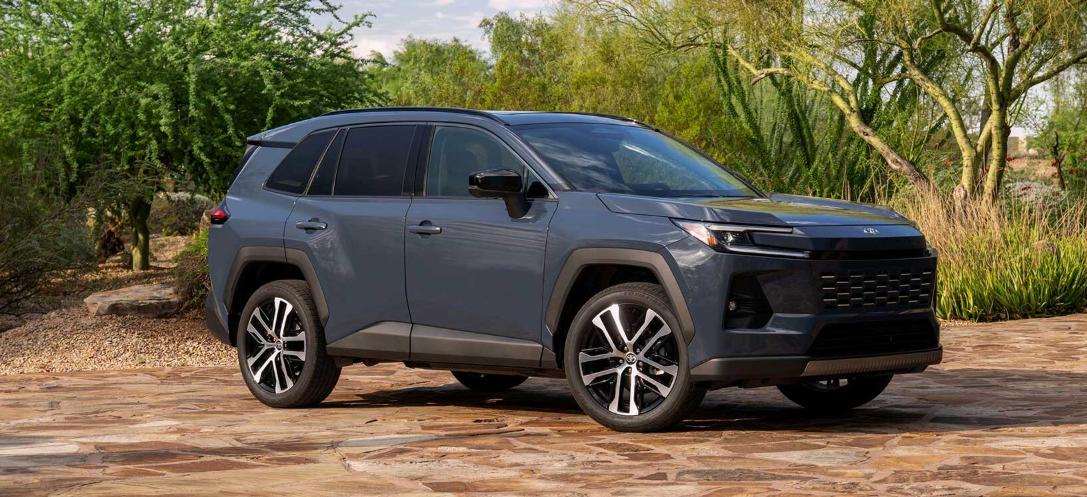
The 2026 Toyota RAV4 represents a major change for one of America’s best-known compact SUVs. Toyota has completely redesigned the RAV4 for the 2026 model year and moved the U.S. lineup to electrified powertrains. Buyers can now choose between a conventional hybrid and a more powerful plug-in hybrid rather than a traditional gas-only RAV4.
The new model combines Toyota’s familiar emphasis on practicality with updated styling, modern technology, improved hybrid performance and multiple trim personalities. But does all of that make it America’s best compact SUV?
Introduction: Why the 2026 RAV4 Matters
The compact SUV market is one of the most competitive areas of the American automotive industry. Buyers want the higher seating position and practicality of an SUV, but many do not need the size, fuel consumption or price of a three-row vehicle.
That is exactly where the Toyota RAV4 has traditionally been positioned. It provides a useful combination of passenger space, cargo capacity, fuel efficiency, available all-wheel drive and everyday drivability.
For 2026, Toyota has made the RAV4 considerably more important by changing the formula. The sixth-generation vehicle is now fully electrified in the United States, meaning shoppers must choose between hybrid and plug-in hybrid technology.
Toyota says more than 6.4 million RAV4 models have reached U.S. roads since the vehicle arrived in America in 1996. That gives the nameplate enormous recognition, but popularity does not automatically make a vehicle the right choice for everyone.
This guide explains what the 2026 Toyota RAV4 offers, how its powertrains work, what separates the trim levels, what advantages and compromises buyers should consider, and whether it deserves to remain at the top of the compact-SUV conversation.
What Is the 2026 Toyota RAV4?
The 2026 Toyota RAV4 is the sixth generation of Toyota’s compact crossover SUV. It has been redesigned from the ground up for the new model year and receives a substantially updated exterior, interior, technology package and electrified powertrain strategy.
For American buyers, the biggest mechanical change is simple: there is no conventional gas-only RAV4 for 2026.
Instead, Toyota offers conventional hybrid models and plug-in hybrid models. Both use a gasoline engine and electric motors, but the plug-in hybrid has a larger battery that can be charged from an external power source.
How Does the RAV4 Hybrid Work?
A conventional hybrid combines a gasoline engine, electric motors, a battery pack and electronic controls. These components work together automatically without requiring the driver to manually switch between gasoline and electric power.
During acceleration, the electric motors can assist the gasoline engine. During certain low-load situations, the vehicle can use electric propulsion. When the driver slows down, regenerative braking can recover some energy that would otherwise be lost as heat through conventional braking.
That recovered energy can be stored in the battery and later used to assist the vehicle again.
For a driver, the important advantage is that the system manages this process automatically. You simply drive normally while the vehicle determines how to combine gasoline and electric power.
Why Does Hybrid Torque Matter?
Torque is essentially twisting force. In everyday driving, you can think of it as part of what helps a vehicle move away from a stop and respond when you press the accelerator.
Electric motors can deliver torque very quickly, which is one reason hybrid vehicles can feel responsive during low-speed acceleration even when their gasoline engines are relatively modest in size.
2026 RAV4 Hybrid Performance
The 2026 RAV4 Hybrid produces 226 net combined system horsepower in applicable front-wheel-drive configurations. Applicable all-wheel-drive versions produce 236 net combined system horsepower.
Those numbers should not be interpreted like the horsepower figure of a conventional gasoline engine. Hybrid system output represents the combined capability of the powertrain rather than simply adding the gasoline engine’s horsepower to the electric motors’ ratings.
For normal American driving, the RAV4 Hybrid is designed more around smooth response and efficiency than outright performance.
RAV4 Front-Wheel Drive vs All-Wheel Drive
The 2026 RAV4 Hybrid is available with front-wheel drive or an electronic all-wheel-drive system on applicable configurations.
Front-wheel drive is usually the logical choice for drivers who spend most of their time on paved roads and do not regularly encounter slippery conditions.
All-wheel drive can be useful for drivers who regularly deal with snow, wet roads, gravel roads or other situations where additional traction is beneficial.
2026 RAV4 Plug-In Hybrid Explained
The plug-in hybrid RAV4 takes Toyota’s electrified strategy a step further. It uses a larger battery that can be charged externally and provides considerably more electric-driving capability than the conventional hybrid.
The 2026 RAV4 Plug-in Hybrid produces 324 combined system horsepower. Toyota estimates up to 52 miles of all-electric driving range for qualifying configurations.
That makes the PHEV particularly interesting for drivers with short daily commutes. Someone who can regularly charge at home may be able to complete many routine trips primarily using electricity.
For longer journeys, the gasoline engine provides additional flexibility, reducing the need to plan every trip around public charging infrastructure.
2026 Toyota RAV4 MPG
Fuel efficiency is one of the RAV4 Hybrid’s biggest advantages. Toyota lists up to an EPA-estimated 47 mpg city and 40 mpg highway for qualifying hybrid configurations.
Not every trim achieves those maximum figures. Wheel size, drivetrain and other configuration differences can affect fuel economy.
Real-world MPG can also vary. Temperature, traffic, tire pressure, road conditions, driving style, cargo weight and climate-control use all influence fuel consumption.
Therefore, advertised MPG should be viewed as a standardized comparison figure rather than a guarantee of what every driver will achieve.
2026 Toyota RAV4 Price and Trims
The 2026 RAV4 Hybrid starts at $31,900 MSRP for the LE grade before applicable fees. Toyota offers several trims designed around different priorities.
| Trim | Starting MSRP | EPA-Estimated MPG | Main Character |
|---|---|---|---|
| LE | $31,900 | 47/40 | Efficiency-focused entry model |
| SE | $34,700 | 47/40 | Sportier appearance |
| XLE Premium | $36,100 | 47/40 | Comfort and convenience |
| Woodland | $39,900 | 41/35 | Outdoor-oriented design |
| XSE | $41,300 | 43/37 | Sportier premium approach |
| Limited | $43,300 | 43/37 | Premium-focused flagship |
MSRP and fuel-economy figures are manufacturer-published figures for the U.S. market. Final transaction prices can vary because of destination charges, taxes, dealer fees, options, accessories and market conditions.
RAV4 LE
The LE is the logical starting point for buyers who want a new RAV4 Hybrid while keeping the purchase price as low as possible within the lineup.
RAV4 SE
The SE moves toward a sportier appearance and provides an attractive option for buyers who want something more visually distinctive without moving as far up the price range as the premium-oriented trims.
RAV4 XLE Premium
The XLE Premium focuses more heavily on comfort and convenience. It can be a good middle ground for buyers who want more equipment without necessarily paying flagship pricing.
RAV4 Woodland
The Woodland is designed around a more rugged personality. It includes outdoor-oriented equipment and styling intended to appeal to drivers who spend more time on gravel roads, campsites and recreational routes.
RAV4 XSE
The XSE emphasizes sporty styling and additional premium equipment. It is aimed at buyers who want the RAV4’s practicality but prefer a more upscale and aggressive appearance.
RAV4 Limited
The Limited sits at the top of the conventional hybrid range and emphasizes comfort, technology and premium features.
Exterior Design
The sixth-generation RAV4 receives a completely redesigned exterior. Toyota gives the SUV a stronger and more modern appearance while maintaining the recognizable compact-SUV proportions that have made the model popular.
Different trim levels deliberately create different visual personalities. Sport-oriented versions look more aggressive, while the Woodland uses a more rugged theme.
This approach is useful because compact-SUV buyers are not one homogeneous group. Some want a comfortable commuter, some want a family vehicle, and others want something that looks ready for weekend adventures.
Interior Design and Comfort
The 2026 RAV4 interior receives a major technology update while continuing to prioritize everyday usability.
A standard 12.3-inch digital gauge cluster provides the driver with configurable information, while infotainment screen sizes vary depending on trim.
The interior is designed around practical family and commuter use rather than trying to transform the RAV4 into a full-size luxury SUV.
Before buying, drivers should still spend time inside the vehicle. Seat comfort, steering-wheel position, visibility and rear-seat space are difficult to judge from specifications alone.
Infotainment and Technology
Toyota equips the 2026 RAV4 with a standard 10.5-inch Toyota Audio Multimedia system. A larger 12.9-inch display is available on higher grades.
Wireless Apple CarPlay and wireless Android Auto are available, allowing compatible smartphones to connect without requiring a physical cable.
Higher trims can add equipment such as a JBL premium audio system and wireless smartphone charging.
The technology package is useful, but buyers should remember that more technology is not automatically better technology. During a test drive, check whether the controls are easy to understand and whether common functions can be operated without unnecessary distraction.
Safety Features
Toyota Safety Sense 4.0 is standard on the 2026 RAV4. The SUV also includes a standard Blind Spot Monitor with Rear Cross-Traffic Alert.
Depending on configuration, additional systems can provide parking assistance, camera visibility and other forms of driver assistance.
Safety ratings should always be checked using the latest official testing information for the specific model year. Buyers should not assume that a previous-generation RAV4 rating automatically applies to the redesigned 2026 model.
Cargo Space and Everyday Practicality
A major reason people choose compact SUVs instead of sedans is cargo flexibility, and the RAV4 continues to emphasize this area.
Toyota lists up to 37.8 cubic feet of cargo capacity for the 2026 RAV4 specifications.
That makes the vehicle suitable for groceries, luggage, sports equipment, shopping and many common family activities.
If you regularly transport large objects, however, do not rely only on the published number. Measure your most frequently transported items and test the cargo opening yourself.
Towing Capacity
When properly equipped, the 2026 RAV4 can tow up to 3,500 pounds.
That is useful for buyers who occasionally need to pull a small trailer, recreational equipment or other appropriately sized loads.
Towing capacity does not mean that every RAV4 configuration should tow the maximum amount in every situation. Trailer weight, tongue weight, passengers, cargo, road conditions and vehicle configuration all matter.
2026 RAV4 Woodland: Who Is It For?
The Woodland trim is aimed at buyers who want more than ordinary city-and-highway transportation.
It features a more rugged design, raised roof rails and available all-terrain tires. These changes can make the vehicle more attractive to outdoor-oriented drivers.
However, rugged equipment can involve trade-offs. More aggressive tires can influence fuel economy, road noise and ride characteristics.
If your driving is almost entirely urban or highway-based, a more efficiency-oriented trim may be a better match.
2026 RAV4 PHEV vs RAV4 Hybrid
| Consideration | RAV4 Hybrid | RAV4 Plug-In Hybrid |
|---|---|---|
| Powertrain | Gasoline engine + electric motors | Gasoline engine + larger battery + electric motors |
| System Output | 226–236 hp depending on configuration | 324 combined system horsepower |
| External Charging | No | Yes |
| Electric Driving | Limited hybrid EV operation | Up to 52 miles estimated for qualifying configurations |
| Best For | Simple hybrid efficiency | Drivers who can charge regularly |
Advantages of the 2026 Toyota RAV4
✓ Pros
- Electrified powertrains throughout the U.S. lineup.
- Strong potential fuel economy from the conventional hybrid.
- Available all-wheel drive.
- Powerful 324-hp plug-in hybrid option.
- Useful electric driving capability in the PHEV.
- Modern digital displays and infotainment.
- Standard Toyota Safety Sense 4.0.
- Practical cargo capacity.
- Up to 3,500 pounds of towing capability when properly equipped.
- Multiple trim personalities for different buyers.
✕ Cons
- No traditional gas-only RAV4 in the U.S. for 2026.
- Higher trims become considerably more expensive.
- The plug-in hybrid carries a significant price premium.
- PHEV owners need convenient charging to maximize its benefits.
- Rugged equipment can reduce fuel economy.
- Larger wheels can increase tire replacement costs.
- Driver-assistance technology still requires an attentive driver.
Common Ownership Considerations
Hybrid Battery
Hybrid systems are designed for long-term vehicle use, but battery performance can change over time. Buyers should review Toyota’s current warranty information and maintenance requirements for the exact vehicle they are considering.
Tire Costs
Higher trims can use larger wheels and tires. Replacement costs can therefore be higher than for a lower trim using smaller wheels.
Fuel Economy Expectations
A hybrid can significantly improve fuel efficiency, but no vehicle will achieve its maximum advertised MPG under every driving condition.
Technology and Electronics
The modern RAV4 uses numerous electronic systems, sensors and cameras. Buyers should understand what each system does and learn its limitations rather than assuming the vehicle can drive itself.
Who Should Buy the 2026 Toyota RAV4?
The 2026 RAV4 is a strong match for drivers who want a compact SUV with hybrid efficiency, practical dimensions and available all-wheel drive.
It can also work well for families who want useful cargo capacity without stepping into a larger SUV.
The standard hybrid is likely to appeal to drivers who want efficiency without changing their daily routine around charging.
The plug-in hybrid makes more sense for buyers who have convenient charging and predictable short-distance driving patterns.
Outdoor-focused drivers may prefer the Woodland, while buyers who prioritize premium equipment may prefer the XSE or Limited.
Who Should Consider Another SUV?
The RAV4 may not be ideal for drivers who prioritize sports-car-like handling, luxury-level materials, maximum interior space or serious off-road capability above everything else.
Budget-conscious shoppers should also compare the final transaction price of the RAV4 against similarly equipped competitors rather than comparing only base MSRP figures.
And if you specifically want a conventional gasoline-only compact SUV, the 2026 U.S. RAV4 lineup is not designed for that preference.
What Buyers Should Check Before Purchasing
- Choose the right powertrain. Decide whether a conventional hybrid or plug-in hybrid better fits your lifestyle.
- Compare trims. Focus on features you will actually use rather than paying for equipment you do not need.
- Consider AWD carefully. Choose it because your driving environment requires additional traction, not simply because it sounds more capable.
- Check charging access. This is especially important if you are considering the PHEV.
- Calculate ownership costs. Consider insurance, fuel, charging, tires, maintenance and financing.
- Test the rear seat. Bring the people who will regularly sit there when possible.
- Test the cargo area. Check whether your normal luggage, equipment or shopping fits comfortably.
- Request the out-the-door price. MSRP does not represent every cost associated with purchasing a vehicle.
- Check current warranty information. Confirm coverage for the exact model and powertrain.
- Take a real test drive. Evaluate ride comfort, visibility, braking, steering, acceleration and technology.
Frequently Asked Questions
Is the 2026 Toyota RAV4 a hybrid?
Yes. The U.S. 2026 RAV4 lineup is electrified, with conventional hybrid and plug-in hybrid models rather than a traditional gas-only version.
How much does the 2026 Toyota RAV4 cost?
The 2026 RAV4 Hybrid starts at $31,900 MSRP for the LE grade before applicable fees. Higher trims and plug-in hybrid versions cost more.
How many MPG does the 2026 RAV4 get?
Fuel economy varies by configuration. Toyota lists up to an EPA-estimated 47 mpg city and 40 mpg highway for qualifying RAV4 Hybrid configurations.
How much horsepower does the 2026 RAV4 have?
The RAV4 Hybrid produces 226 net combined system horsepower in applicable front-wheel-drive configurations and 236 horsepower in applicable all-wheel-drive versions. The RAV4 Plug-in Hybrid produces 324 combined system horsepower.
Does the 2026 RAV4 have AWD?
Yes. All-wheel drive is available on applicable RAV4 Hybrid configurations, while the RAV4 Plug-in Hybrid comes with AWD.
How much can the 2026 RAV4 tow?
The 2026 RAV4 can tow up to 3,500 pounds when properly equipped. Buyers should verify the exact rating for their chosen configuration.
Is the 2026 RAV4 good for families?
Yes. Its compact size, practical cargo area, hybrid powertrain options, available AWD and modern technology make it a strong family-SUV candidate. Individual families should still test rear-seat and cargo space for their specific needs.
Is the RAV4 Plug-in Hybrid better than the regular hybrid?
Not for every buyer. The PHEV provides substantially more power and electric driving capability, but it costs more and benefits most from regular charging. The standard hybrid may be the better choice for buyers who want simplicity and efficiency.
Is the 2026 RAV4 one of the best compact SUVs?
It has a strong case because of its combination of hybrid efficiency, practicality, available AWD, technology, safety equipment and trim variety. However, the best compact SUV depends on the buyer’s budget, priorities and comparison with competing models.
Final Verdict
The 2026 Toyota RAV4 is a major evolution of one of America’s most recognizable compact SUVs.
Toyota has retained the qualities that have made the RAV4 popular while moving the model decisively toward electrification. The conventional hybrid offers a strong balance of efficiency and convenience, while the plug-in hybrid adds substantially more power and electric-driving capability.
The redesign also gives buyers more technology, more distinctive trim personalities and a modernized interior and exterior.
There are compromises. Higher trims can become expensive, the PHEV requires charging to deliver its maximum value, and buyers who specifically want a gas-only SUV will need to look elsewhere.
A highly competitive compact SUV with excellent versatility, strong hybrid technology and a broad range of configurations. Your individual needs should determine whether it is the right choice.
So, is it still America’s best compact SUV? The 2026 Toyota RAV4 certainly deserves to be part of the conversation. For many American drivers looking for an efficient, practical and technologically modern compact SUV, it should be high on the test-drive list.
Join the conversation
Be the first to share your thoughts.
Leave a comment