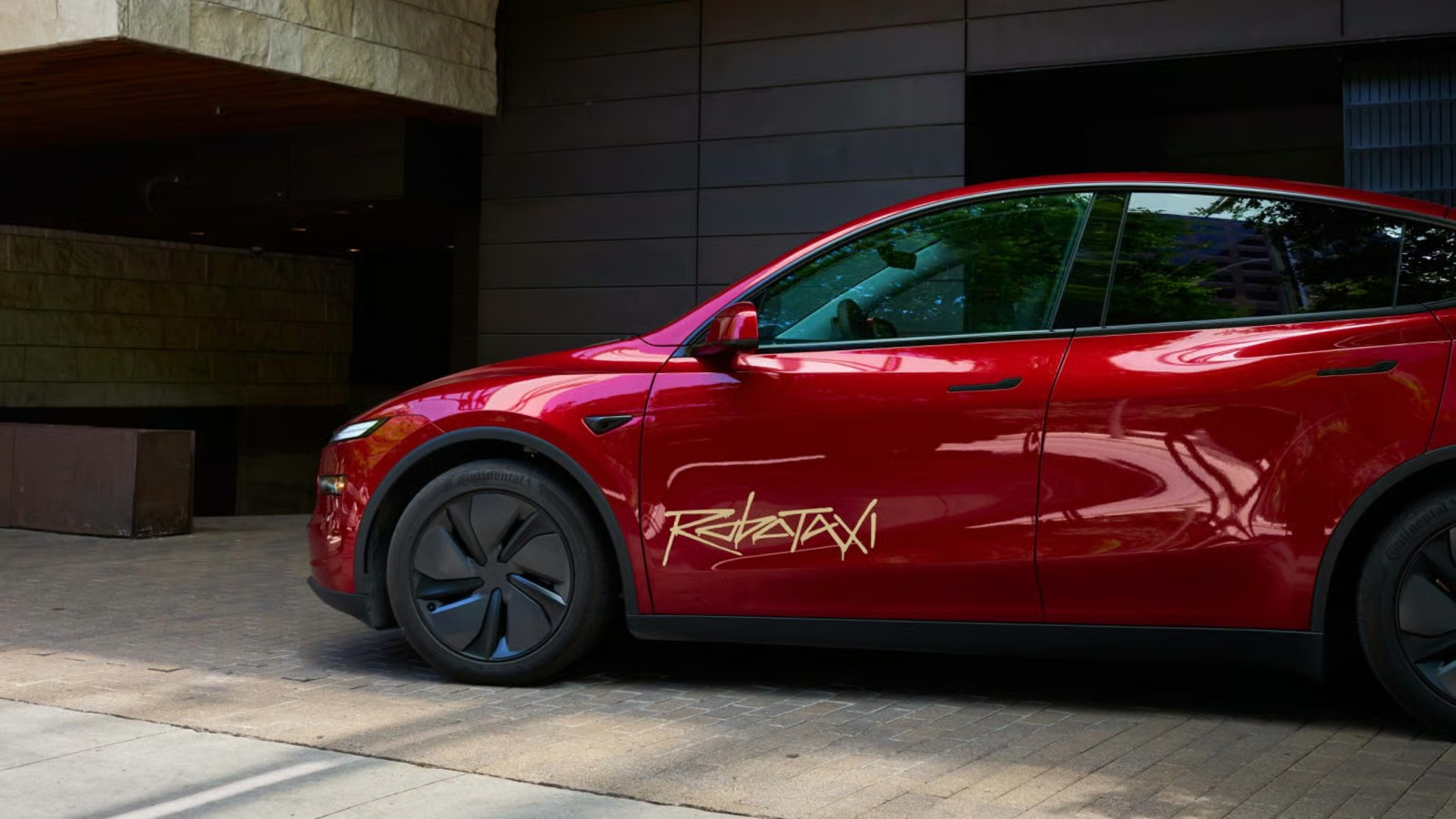
Tesla Adds 79 Model Y Robotaxis in One Day as Texas Fleet Surges to 270
Tesla has sharply increased the size of its registered Texas Robotaxi fleet, adding dozens of Model Ys in a single day as the company pushes deeper into autonomous ride-hailing.
Tesla’s Robotaxi Expansion Suddenly Accelerates
Tesla’s autonomous-driving ambitions are moving into a new phase as the company rapidly expands the number of vehicles associated with its Robotaxi operation in Texas.
According to Texas vehicle registration data cited in recent reporting, Tesla added 79 Model Y vehicles in a single day, taking the registered Texas fleet from 191 to 270 vehicles. :contentReference[oaicite:1]{index=1}
The increase arrived shortly after Tesla communicated changes to its Robotaxi operation, including longer service hours, a larger unsupervised fleet and routing improvements intended to reduce passenger waiting times. :contentReference[oaicite:2]{index=2}
Adding that many registered vehicles in one day represents a major jump in the size of Tesla’s Texas Robotaxi operation. But registration should not automatically be interpreted as proof that every vehicle was immediately deployed with passengers.
The Numbers Behind the Expansion
The Texas registration data provides a useful snapshot of how quickly Tesla is building out its autonomous-vehicle infrastructure.
What Happened in Texas?
Tesla’s Robotaxi fleet had already been expanding throughout the summer, but the latest registration batch represents a particularly large single-day increase.
79 Vehicles Registered
Texas records show a large batch of additional Model Ys appearing under Tesla’s Robotaxi operation. :contentReference[oaicite:3]{index=3}
Fleet Reaches 270
The reported total rose from 191 to 270 registered vehicles, representing a substantial expansion of the Texas fleet. :contentReference[oaicite:4]{index=4}
Expansion Follows Service Changes
The fleet increase came alongside news that Tesla had extended Robotaxi operating hours and was working with an expanded unsupervised fleet. :contentReference[oaicite:5]{index=5}
Longer Robotaxi Hours Mean More Opportunity for Utilization
Tesla has told riders that its Robotaxi service now operates from 6 a.m. until 10 p.m., seven days a week.
Extending the operating window matters because a larger vehicle fleet becomes considerably more valuable when those vehicles can generate rides across a larger portion of the day.
More vehicles combined with longer operating hours could allow Tesla to gather more real-world driving data and provide more ride capacity if the vehicles are actively deployed.
Registration Numbers Are Not the Same as Active Robotaxis
This is an important distinction when looking at autonomous-vehicle fleet statistics.
Texas requires autonomous operators to register vehicles with the state. That makes the registration database a useful way to measure the size of an operator’s authorized vehicle pool.
A newly registered Model Y could still be undergoing preparation, software configuration, testing, relocation or other deployment steps before it begins regular commercial service.
Why Is Tesla Using Model Y Vehicles?
The Model Y provides Tesla with a vehicle platform that is already produced at large scale and designed around the company’s software ecosystem.
Existing Production Platform
Using a vehicle already manufactured at significant volume gives Tesla an established hardware foundation for fleet expansion.
Familiar Vehicle Architecture
The Model Y already incorporates the cameras, computers and software systems central to Tesla’s driver-assistance strategy.
Passenger-Friendly Layout
Its SUV-style body provides useful passenger and cargo space for ride-hailing applications.
Fleet Scalability
Expanding a fleet around an existing production model can be simpler than building an entirely new autonomous vehicle from scratch.
Tesla Says Routing Improvements Should Reduce Wait Times
Tesla has also pointed to upgraded routing as part of the latest Robotaxi improvements.
For passengers, this could be just as important as the number of vehicles available. A large autonomous fleet is only useful if the system can efficiently position vehicles near demand.
Dispatching, routing, vehicle positioning and demand prediction determine how effectively those vehicles can actually serve passengers.
The Bigger Question: Can Tesla Keep Scaling?
Adding 79 vehicles at once demonstrates that Tesla can increase the registered fleet quickly. The next challenge is turning fleet growth into a consistently reliable customer experience.
Vehicle Availability
More vehicles should increase capacity when enough cars are actively positioned in areas with passenger demand.
Autonomous Reliability
The system must handle increasingly diverse real-world traffic situations without frequent human intervention.
Customer Experience
Wait times, pickup accuracy, routing and ride quality will determine whether passengers actually embrace the service.
Regulatory Requirements
Autonomous fleet expansion remains closely connected to state and federal rules governing driverless vehicles.
Tesla Is Expanding Into an Increasingly Competitive Robotaxi Market
Tesla is not entering autonomous ride-hailing alone.
Other companies, including Waymo and Zoox, are also operating autonomous ride services, while the wider industry continues to debate how quickly driverless transportation can scale.
That makes fleet growth particularly important. Tesla needs not only enough vehicles, but also enough operational reliability to compete with established autonomous ride-hailing networks.
Why Texas Matters So Much to Tesla
Texas has become an important location for Tesla’s autonomous-driving ambitions, particularly because of the company’s major presence in Austin.
The state’s registration framework also provides a relatively visible way to track changes in autonomous vehicle fleets.
That makes every major registration batch worth watching as Tesla develops its Robotaxi network.
The Fleet Growth Tells a Bigger Story
The jump from 191 to 270 registered vehicles is more than an isolated statistic.
It shows that Tesla is building the physical infrastructure needed to support a much larger autonomous ride-hailing operation.
The next question is whether the company’s software and operations can make effective use of that growing hardware base.
As Tesla increases the number of Robotaxi vehicles, the company will have more opportunities to demonstrate whether its autonomous-driving strategy can work reliably at commercial scale.
What This Could Mean for Tesla’s Autonomous Future
If Tesla can continue increasing its fleet while maintaining reliable autonomous operation, the economics of its Robotaxi strategy could become increasingly important to the company’s broader automotive ambitions.
A large fleet could eventually provide Tesla with a substantial autonomous transportation network rather than simply another driver-assistance feature inside privately owned cars.
But that future depends on much more than registration numbers. Safety, reliability, utilization, regulation, customer satisfaction and operating economics will all determine whether rapid fleet growth translates into a sustainable business.
Frequently Asked Questions
How many Tesla Robotaxis were added in Texas?
The reported registration data shows 79 additional Model Y vehicles were added in one day.
How large did the Texas fleet become?
The reported total increased from 191 to 270 registered Model Y Robotaxis. :contentReference[oaicite:6]{index=6}
Does 270 mean 270 Robotaxis were carrying passengers?
Not necessarily. The figure represents registered autonomous vehicles and should not automatically be interpreted as the number actively carrying passengers at a particular moment.
What vehicle is Tesla using for the Texas Robotaxi fleet?
The vehicles identified in the registration data are Model Ys. :contentReference[oaicite:7]{index=7}
What changed with Tesla’s Robotaxi service?
Tesla communicated longer operating hours, an expanded unsupervised fleet and routing improvements intended to shorten passenger waits. :contentReference[oaicite:8]{index=8}
Why is the fleet increase important?
A larger registered fleet gives Tesla more physical capacity to expand autonomous ride-hailing operations, although actual service performance depends on deployment, software, demand and regulatory factors.
Tesla’s 79-Car Robotaxi Surge Is a Sign of Bigger Ambitions
Tesla’s addition of 79 Model Y Robotaxis in a single day represents a striking expansion of its registered Texas autonomous fleet.
Reaching a reported 270 vehicles gives Tesla a much larger physical foundation for its Robotaxi ambitions and comes at a time when the company is also extending operating hours and working to improve routing.
But the real story will be what happens next. Registration numbers measure fleet growth; real-world performance will determine whether that growth becomes a successful autonomous transportation network.
If Tesla can combine a rapidly expanding fleet with dependable driverless operation and a strong passenger experience, Texas could become one of the most important proving grounds for the company’s autonomous future.
BLOG4CARS.COM — Cars, EVs, autonomous driving, technology and the future of mobility.
Join the conversation
Be the first to share your thoughts.
Leave a comment