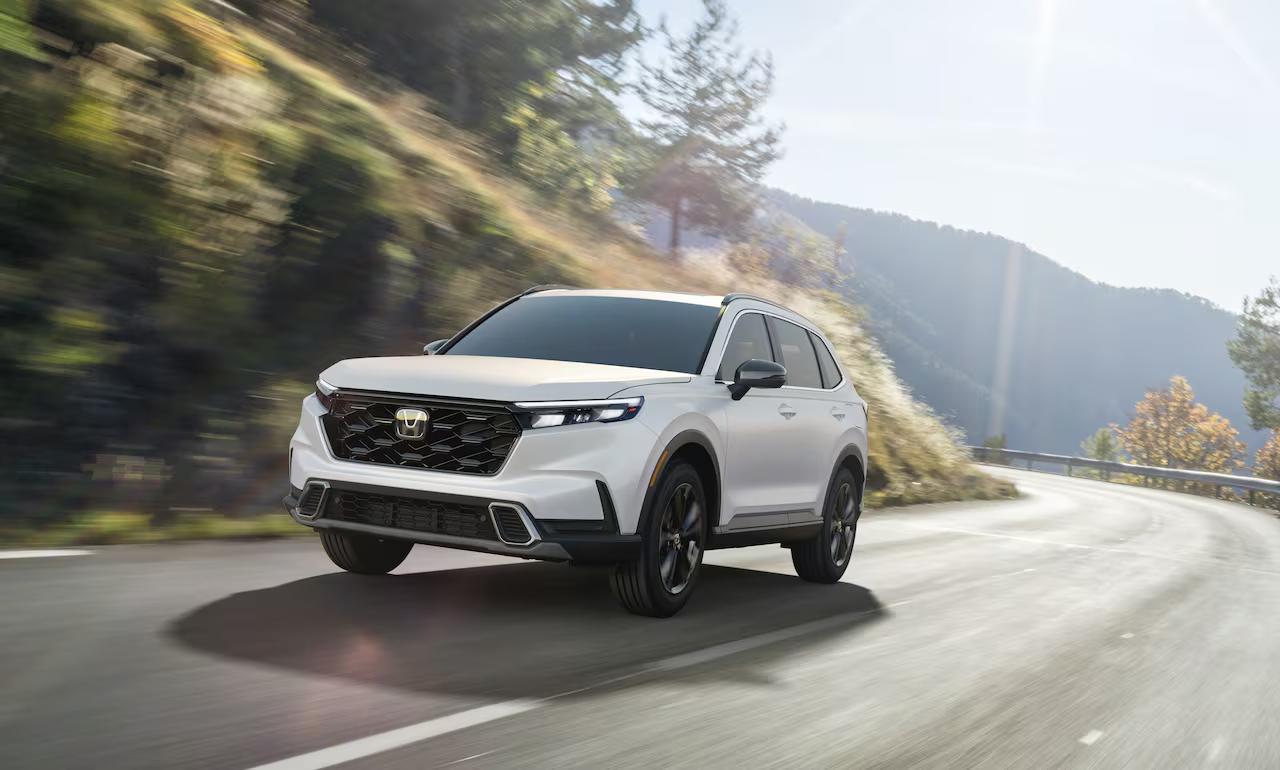
The 2026 Honda CR-V continues to target one of the most important groups in the American automotive market: families who want an SUV that is comfortable, practical, efficient and easy to live with. For 2026, Honda adds more standard technology and introduces the new TrailSport Hybrid, while continuing to offer both gasoline and hybrid powertrains.
The result is a CR-V that remains focused on everyday usefulness rather than extreme performance. But with strong competition from vehicles such as the redesigned 2026 Toyota RAV4, is the CR-V still America’s best family SUV?
Introduction: Why the Honda CR-V Remains Important
The Honda CR-V has become one of the best-known compact SUVs in the United States because it focuses on something many drivers actually need: balance.
It is large enough for a family, compact enough for everyday city driving, efficient enough for commuting and versatile enough for road trips, shopping and weekend activities.
That balance becomes especially important when shopping for a family vehicle. A family SUV does not necessarily need the biggest engine or the most aggressive styling. Instead, buyers often care about rear-seat space, cargo room, fuel economy, comfort, safety technology, easy controls and reasonable ownership costs.
For 2026, Honda keeps the current generation’s basic formula while adding useful technology updates and expanding the lineup with the TrailSport Hybrid.
This review examines the 2026 Honda CR-V from a practical family perspective, including its engines, hybrid system, fuel economy, trims, interior, cargo space, safety technology, advantages, disadvantages and competition.
What Is the 2026 Honda CR-V?
The 2026 Honda CR-V is a five-passenger compact crossover SUV. It sits between smaller SUVs such as the Honda HR-V and larger Honda models such as the Passport and Pilot.
Its compact dimensions make it easier to maneuver and park than a large SUV while providing more useful interior and cargo space than many traditional sedans.
For 2026, the CR-V is available with either a 1.5-liter turbocharged four-cylinder gasoline engine or Honda’s two-motor hybrid system, depending on trim.
2026 Honda CR-V Powertrain Choices
1.5-Liter Turbocharged Gasoline Engine
The gasoline-powered CR-V uses a 1.5-liter turbocharged four-cylinder engine producing 190 horsepower. It is paired with a continuously variable transmission, commonly called a CVT.
A turbocharger uses exhaust energy to force more air into the engine. More air allows the engine to burn more fuel efficiently under the right conditions and generate useful power from a relatively small displacement.
The CR-V’s turbo engine is designed more for smooth everyday transportation than high-performance driving. It provides enough power for normal commuting, family trips and highway travel, although buyers looking for stronger acceleration may prefer the hybrid.
What Is a CVT?
A continuously variable transmission does not use a traditional fixed set of gears in exactly the same way as a conventional automatic transmission. Instead, it can continuously vary its ratio to keep the engine operating in an appropriate range.
The advantage is efficient operation and smooth acceleration. The disadvantage is that some drivers dislike the engine sound under heavy acceleration because the engine can remain at a relatively constant RPM while the vehicle gathers speed.
Two-Motor Hybrid Powertrain
Honda’s hybrid system uses a two-motor arrangement and produces 204 horsepower. It is standard on the Sport Hybrid, TrailSport Hybrid, Sport-L Hybrid and Sport Touring Hybrid.
The hybrid system can use electric motors to assist propulsion while also using the gasoline engine when appropriate. Energy can be recovered during deceleration and braking and stored in the hybrid battery.
For families, the advantage is straightforward: the hybrid can provide stronger efficiency while also offering responsive electric assistance.
2026 Honda CR-V MPG
Fuel economy is one of the major reasons to consider the CR-V Hybrid.
Honda lists up to 40 mpg city and 34 mpg highway for qualifying hybrid configurations. Other configurations have different EPA ratings, so buyers should check the exact trim and drivetrain rather than assuming every CR-V Hybrid achieves the maximum figure.
The gasoline-powered CR-V is rated at up to 28 mpg city and 33 mpg highway in qualifying configurations.
Actual fuel economy can vary depending on traffic, weather, temperature, tire pressure, driving style, passenger and cargo weight, road conditions and climate-control use.
2026 Honda CR-V Price and Trim Levels
Honda lists the 2026 CR-V LX at $30,920 starting MSRP before applicable charges and fees. The lineup then expands through gasoline, hybrid and TrailSport versions.
| Trim | Starting MSRP | Powertrain | Key Character |
|---|---|---|---|
| LX | $30,920 | 1.5L Turbo | Value-focused entry model |
| EX | $33,150 | 1.5L Turbo | More comfort and convenience |
| Sport Hybrid | $35,630 | 204-hp Hybrid | Sporty hybrid option |
| EX-L | $35,400 | 1.5L Turbo | Comfort and premium features |
| TrailSport Hybrid | $38,800 | 204-hp Hybrid | Adventure-oriented |
| Sport-L Hybrid | $38,725 | 204-hp Hybrid | Sporty and more upscale |
| Sport Touring Hybrid | $42,550 | 204-hp Hybrid | Top-level technology and comfort |
Prices shown are Honda’s published U.S. starting MSRPs and can change with destination charges, taxes, dealer fees, accessories, options and other costs. Verify the final price with a Honda dealer before purchasing.
CR-V LX
The LX is designed for buyers who want the CR-V’s basic practicality without moving into the more expensive trims. It includes the 190-horsepower turbocharged engine and a 9-inch color touchscreen.
Wireless Apple CarPlay and Android Auto compatibility and a wireless phone charger are also included.
CR-V EX
The EX adds features that make everyday family use more convenient, including heated front seats, a power moonroof, dual-zone automatic climate control and a power driver’s seat.
CR-V EX-L
The EX-L moves the CR-V toward a more premium experience with leather-trimmed seating, a power tailgate, parking sensors and additional interior conveniences.
CR-V Sport Hybrid
The Sport Hybrid combines the 204-horsepower hybrid system with sport-oriented styling, 18-inch gloss-black wheels and roof rails.
CR-V TrailSport Hybrid
The TrailSport Hybrid is one of the most interesting additions for 2026. It uses the hybrid powertrain and adds an adventure-focused design with 18-inch wheels, all-terrain tires and a power tailgate.
This is not intended to transform the CR-V into a hardcore off-road vehicle. Instead, it gives buyers who enjoy camping, gravel roads and outdoor activities a more rugged version of the familiar CR-V formula.
CR-V Sport-L Hybrid
The Sport-L Hybrid combines the hybrid system with a more premium interior, leather-trimmed seating and sportier exterior details.
CR-V Sport Touring Hybrid
The Sport Touring Hybrid sits at the top of the range. It combines hybrid performance with premium features such as a Bose audio system, hands-free access power tailgate and Google built-in.
Is the 2026 Honda CR-V Good for Families?
This is where the CR-V becomes particularly strong.
A family vehicle needs to work in situations that have nothing to do with horsepower figures. Parents need to fit child seats, school bags, groceries, luggage, sports equipment and other everyday items.
The CR-V’s compact exterior dimensions make it relatively easy to drive around town while its interior provides generous passenger and cargo space.
The rear seat is one of the CR-V’s biggest strengths. Adults can generally use the rear seating area comfortably, and the vehicle’s layout is practical for families who frequently carry passengers.
The 60/40 split-folding rear seatback also provides flexibility when passengers and cargo need to share the same space.
Cargo Space and Practicality
Cargo capacity is another important reason families choose compact SUVs.
The 2026 CR-V provides up to 39.3 cubic feet of cargo capacity behind the second row according to current published specifications, giving it a useful amount of room for groceries, luggage and family equipment.
Numbers are useful for comparisons, but families should also examine the shape of the cargo area. A wide opening, low loading height and practical floor design can matter just as much as the published cubic-foot figure.
Interior Comfort
Honda has designed the CR-V around a straightforward family-friendly interior rather than an overly complicated cabin.
The seating position provides the elevated view many SUV buyers want without making the vehicle excessively large.
Higher trims add leather-trimmed seating, heated front seats, power seating and other comfort features.
The interior also benefits from Honda’s effort to keep frequently used controls understandable. That matters for family vehicles because drivers may already be dealing with passengers, navigation and traffic.
2026 CR-V Technology
One of the most important technology changes for 2026 is the larger standard 9-inch central touchscreen.
Wireless Apple CarPlay and Android Auto are standard, as is a wireless smartphone charging pad.
Higher trims can add Google built-in, which integrates Google services such as navigation and voice assistance into the vehicle’s infotainment environment.
The technology is useful for families because smartphones, navigation and communication have become part of everyday driving. However, drivers should still configure navigation and other functions before starting a trip whenever possible.
Safety Technology
Honda equips the 2026 CR-V with a broad collection of driver-assistance technologies.
Depending on trim, features include collision mitigation braking, road departure mitigation, adaptive cruise control with low-speed follow, lane keeping assistance, traffic sign recognition and blind-spot monitoring with cross-traffic alert.
These systems are designed to assist the driver and potentially reduce the consequences of certain situations. They do not eliminate the need for attention.
Honda CR-V TrailSport Hybrid
The TrailSport name has become increasingly important within Honda’s SUV lineup, and the 2026 CR-V receives a TrailSport Hybrid version.
The TrailSport Hybrid includes all-terrain tires, 18-inch wheels and a more rugged visual treatment. All-wheel drive is standard on this trim.
Honda also offers a Trail Experience application designed to integrate trail and vehicle information through Apple CarPlay compatibility.
The TrailSport should be viewed as a more adventure-oriented compact SUV rather than a dedicated rock-crawling vehicle. It is better suited to drivers who want additional versatility for gravel roads, campsites and outdoor recreation.
All-Wheel Drive: Is It Worth It?
Honda’s Real Time AWD system is available on applicable CR-V configurations and standard on the TrailSport Hybrid and Sport Touring Hybrid.
AWD can provide additional traction in conditions such as rain, snow and loose surfaces. It can also provide greater confidence for drivers who regularly travel on roads where traction can change.
However, AWD adds complexity and can affect fuel economy compared with otherwise similar front-wheel-drive configurations.
For families living in areas with significant winter weather, AWD may be worth the additional cost. For drivers in mild climates who rarely encounter slippery roads, front-wheel drive may be sufficient.
Driving Experience
The CR-V is designed around comfort and predictable handling rather than aggressive performance.
The gasoline engine provides adequate power for normal driving, while the hybrid offers a more responsive powertrain character and additional efficiency.
The suspension is tuned to provide a comfortable ride, making the CR-V suitable for long family trips as well as daily commuting.
Drivers looking for a particularly sporty compact SUV may find alternatives such as the Mazda CX-50 more engaging. But for buyers who prioritize comfort and balance, the CR-V’s driving character is a major advantage.
Fuel Economy vs Performance
One of the most useful decisions when buying a CR-V is choosing between the gasoline and hybrid powertrains.
The gasoline model starts at a lower price and provides a familiar ownership experience. The hybrid costs more but can offer better fuel economy and stronger system output.
| Feature | Gasoline CR-V | CR-V Hybrid |
|---|---|---|
| Engine/System | 1.5L Turbocharged 4-cylinder | Two-Motor Hybrid |
| Power | 190 hp | 204 hp |
| Maximum EPA MPG | 28 city / 33 highway | Up to 40 city / 34 highway depending on configuration |
| Transmission | CVT | Two-motor hybrid system |
| Best For | Lower initial cost | Efficiency and stronger hybrid response |
2026 Honda CR-V Advantages
✓ Pros
- Very practical family-friendly interior.
- Generous rear-seat space.
- Large and useful cargo area.
- Available efficient hybrid powertrain.
- 204-horsepower hybrid system.
- Available Real Time AWD.
- New TrailSport Hybrid adds a more rugged option.
- Standard 9-inch touchscreen for 2026.
- Wireless Apple CarPlay and Android Auto.
- Comfortable ride and easy everyday driving.
- Strong range of trims for different budgets and lifestyles.
✕ Cons
- Higher trims can become expensive.
- AWD is not standard on every configuration.
- The gasoline powertrain is less efficient than the hybrid.
- The CVT may feel noisy during hard acceleration.
- It is not designed as a serious off-road SUV.
- Some competitors offer stronger luxury or sport-oriented characteristics.
- Hybrid pricing may not make sense for every low-mileage driver.
Common Ownership Considerations
Fuel Costs
Families who drive significant annual mileage should consider the hybrid because fuel savings can accumulate over years of ownership.
However, buyers should compare the actual price difference between equivalent trims and calculate their expected annual fuel consumption rather than assuming a hybrid will automatically save money.
Tire Costs
Higher trims can use larger wheels and different tire sizes. Replacement tires may therefore cost more than tires on lower trims.
Hybrid Battery
Hybrid buyers should understand the warranty and maintenance coverage applicable to the hybrid system and battery. Modern hybrid systems are designed for long-term use, but battery components can eventually require service or replacement.
Regular Maintenance
Even a hybrid still requires routine maintenance. Owners should follow Honda’s maintenance recommendations for oil, filters, tires, brakes, fluids and inspections.
Regenerative braking can reduce some friction-brake use in certain driving situations, but brake components still need inspection.
How Family-Friendly Is the 2026 CR-V?
The CR-V’s strongest argument is its ability to handle normal family life without becoming unnecessarily large.
It offers five seats, generous rear passenger space, useful cargo capacity and a comfortable driving position.
Parents can also benefit from features such as a power tailgate on higher trims, heated seats, smartphone connectivity, available AWD and a broad collection of driver-assistance systems.
For many families, that combination is more useful than having a huge engine or extreme off-road capability.
2026 Honda CR-V vs Toyota RAV4
The Toyota RAV4 is one of the CR-V’s most important competitors, particularly because the RAV4 has been completely redesigned for 2026.
The two SUVs take slightly different approaches. Honda continues to offer both gasoline and hybrid CR-V models, while Toyota has moved the U.S. RAV4 lineup to electrified powertrains.
The CR-V has a strong reputation for passenger and cargo practicality, while the RAV4 offers a broad electrified lineup including a powerful plug-in hybrid.
For a family buyer, the best choice depends on priorities such as price, fuel economy, rear-seat comfort, cargo requirements, AWD needs, charging access and preferred technology.
Who Should Buy the 2026 Honda CR-V?
The 2026 CR-V is particularly well suited to families who want a comfortable compact SUV with useful passenger and cargo space.
It is also a good fit for commuters who want a vehicle that is easy to drive every day while still providing SUV practicality.
The hybrid is especially attractive for drivers who travel significant distances and want improved fuel efficiency.
The TrailSport Hybrid is a better match for buyers who regularly enjoy outdoor activities and want a more rugged appearance and all-terrain tires.
The Sport Touring Hybrid is aimed at buyers who want the most premium CR-V experience and are comfortable paying considerably more for additional equipment.
Who Should Consider Another SUV?
The CR-V may not be the best choice for someone who wants serious off-road capability, maximum towing capacity or a particularly sporty driving experience.
It may also not be ideal for buyers whose primary goal is the lowest possible purchase price. The base model is competitively positioned, but higher trims can move into a price range where buyers should compare larger or differently equipped vehicles.
Finally, drivers who want a fully electric vehicle will need to consider another model because the CR-V remains primarily a gasoline and hybrid SUV.
What Buyers Should Check Before Buying
- Decide between gas and hybrid. Calculate your expected annual mileage and fuel costs.
- Compare equivalent trims. Look at equipment rather than comparing only base MSRP.
- Decide whether AWD is necessary. Consider your climate and driving conditions.
- Test the rear seat. Families should check legroom and child-seat compatibility.
- Test the cargo area. Bring a stroller, luggage or other common family equipment if possible.
- Check technology. Make sure the infotainment system and controls are easy for you to use.
- Calculate insurance costs. Insurance varies by location, driver history, coverage and vehicle.
- Check tire sizes. Larger wheels can mean higher tire replacement costs.
- Request an out-the-door price. Ask the dealer for the complete purchase cost rather than focusing only on MSRP.
- Review warranty and maintenance information. Use Honda’s current documentation for the exact vehicle.
- Take a meaningful test drive. Drive in city traffic, on a highway and over roads similar to those you normally use.
Frequently Asked Questions
Is the 2026 Honda CR-V a good family SUV?
Yes. Its spacious rear seating, useful cargo area, comfortable ride, available hybrid powertrain and broad range of safety and convenience features make it a strong choice for many families.
How much does the 2026 Honda CR-V cost?
Honda lists the 2026 CR-V LX at a starting MSRP of $30,920 before applicable charges and fees. Higher trims and hybrid models cost more.
How much horsepower does the 2026 Honda CR-V have?
Gasoline-powered LX, EX and EX-L models use a 190-horsepower 1.5-liter turbocharged engine. Hybrid models use a 204-horsepower two-motor hybrid powertrain.
How many MPG does the 2026 Honda CR-V get?
The gasoline CR-V is rated up to 28 mpg city and 33 mpg highway in qualifying configurations. The hybrid can achieve up to 40 mpg city and 34 mpg highway depending on configuration.
Does the 2026 Honda CR-V have AWD?
Yes. Honda’s Real Time AWD is available on applicable CR-V configurations and is standard on the TrailSport Hybrid and Sport Touring Hybrid.
Does the 2026 Honda CR-V have a hybrid?
Yes. Honda offers a 204-horsepower two-motor hybrid powertrain on Sport Hybrid, TrailSport Hybrid, Sport-L Hybrid and Sport Touring Hybrid models.
What is the 2026 Honda CR-V TrailSport?
The TrailSport Hybrid is the adventure-oriented CR-V trim. It combines the hybrid powertrain with all-wheel drive, 18-inch wheels, all-terrain tires and TrailSport-specific styling and equipment.
How much cargo space does the 2026 Honda CR-V have?
Current published specifications list up to 39.3 cubic feet of cargo capacity behind the second row. Actual usability depends on how the cargo area is loaded and the specific vehicle configuration.
Is the Honda CR-V better than the Toyota RAV4?
Neither is automatically better for every buyer. The CR-V emphasizes family practicality, comfort and available hybrid efficiency, while the redesigned 2026 RAV4 offers an all-electrified U.S. lineup and a powerful plug-in hybrid option. Buyers should compare similarly equipped versions.
Is the 2026 Honda CR-V worth buying?
For many buyers, yes. Its combination of space, comfort, efficiency, technology and easy everyday driving makes it one of the strongest choices in the compact-SUV class. The right trim and powertrain depend on your budget and driving needs.
Final Verdict: Is the 2026 Honda CR-V America’s Best Family SUV?
The 2026 Honda CR-V makes a strong argument for the title because it concentrates on the things families use every day.
It provides generous passenger space, a useful cargo area, a comfortable ride, straightforward driving manners and a choice between gasoline and hybrid powertrains.
The 2026 updates also make the CR-V more competitive technologically, with a larger standard touchscreen, wireless smartphone connectivity and additional available features.
The new TrailSport Hybrid gives the lineup another useful personality, especially for drivers who want a more rugged-looking vehicle without moving to a much larger SUV.
There are compromises. The gasoline CR-V is not especially sporty, AWD is not standard across the lineup, higher trims can become expensive and the hybrid’s advantages are less compelling for drivers who cover very few miles.
So, is it America’s best family SUV? There is no single answer for every household, but the 2026 Honda CR-V deserves to be near the top of the list. Its greatest strength is balance: it does not try to be the biggest, fastest or most luxurious SUV. Instead, it focuses on being useful in the situations that matter most to everyday American families.
Join the conversation
Be the first to share your thoughts.
Leave a comment