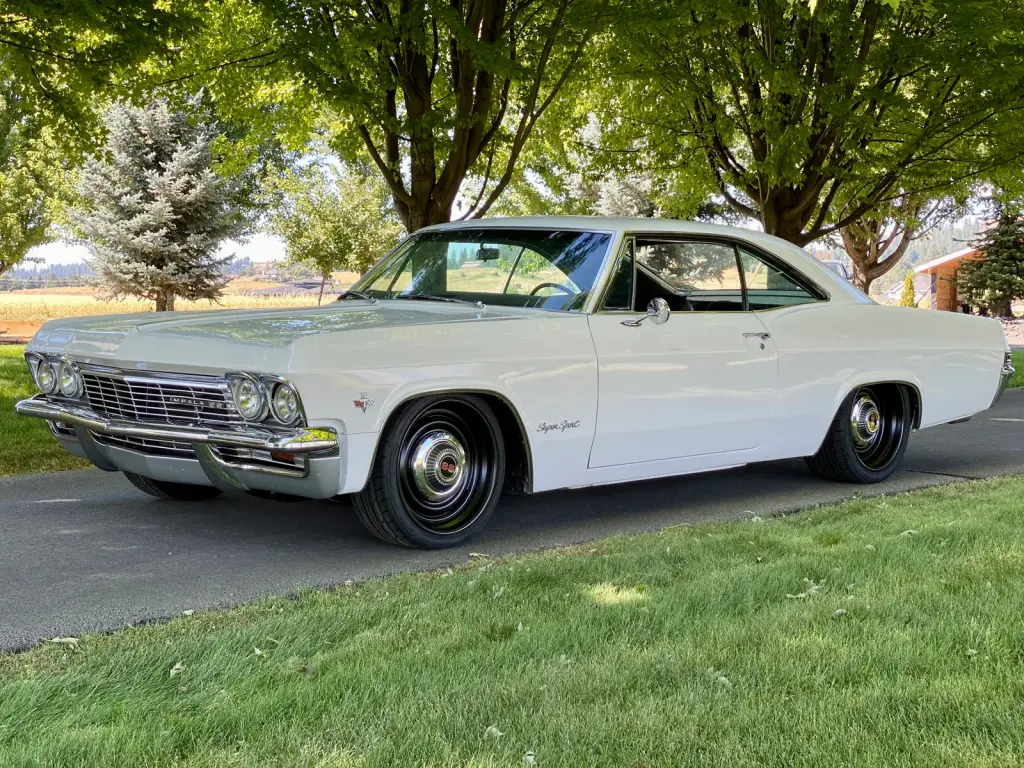
1965 Chevrolet Impala SS Gets a Serious Pro Touring Upgrade
New wheels, modern suspension and powerful upgraded brakes are transforming this classic Impala SS into a more capable and aggressive restomod.
When Classic Style Meets Modern Chassis Technology
The 1965 Chevrolet Impala SS has the kind of styling that immediately identifies it as an American classic. But beneath the familiar body, modern restomod technology can dramatically change the way a large vintage car behaves.
One particular Pro Touring build has reached an important stage, bringing together a redesigned suspension, substantially upgraded brakes and a new wheel-and-tire combination.
The goal of a serious Pro Touring build is to make a classic car sharper, more controlled and more enjoyable to drive while retaining the character that made the original automobile special.
The Build at a Glance
The latest update brings several major chassis and wheel upgrades together on the same car.
A Completely Different Approach to Suspension
The new suspension package is built around a full-car coil-over arrangement. Rather than simply replacing individual components, the setup incorporates upgraded control arms, sway bars and coil-over units across the vehicle.
This kind of system is popular in the Pro Touring world because it gives builders much greater control over ride height, spring rates and overall chassis behavior.
Coil-Over Technology
Coil-over systems combine the spring and shock absorber into a compact adjustable package and are widely used in modern performance builds.
New Control Arms
Updated control arms can help establish more precise suspension geometry and support modern performance goals.
Larger Sway Bars
Upgraded anti-roll components can help manage body movement when the car is driven through corners.
Adjustable Setup
A modern suspension system gives builders more opportunities to tune the car for street driving, spirited use or a more performance-focused setup.
Big Brakes for a Big American Classic
Increasing performance without upgrading braking capability would leave an important part of the equation unfinished.
This Impala receives a substantial brake package with six-piston calipers at all four corners. The front uses a larger rotor setup, while the rear receives its own dedicated performance package.
Why the Brake Upgrade Matters
The braking system is one of the most important upgrades on any performance-oriented restomod. More power and better cornering capability are only useful if the car can also slow down with confidence and consistency.
Larger Rotors
Larger braking surfaces can provide greater thermal capacity, an important consideration during repeated hard stops.
Multi-Piston Calipers
Multiple pistons distribute clamping force across the brake pad and can support strong, consistent braking performance.
Modern Performance
Contemporary brake technology can make a large classic feel considerably more confidence-inspiring during spirited driving.
Balanced Chassis
Suspension, wheels, tires and brakes should work together as a complete system rather than being treated as isolated upgrades.
19-Inch Wheels Change the Entire Personality
Wheel design can completely change the visual character of a classic car. On this Impala, the build uses 19-inch Forgeline OE1 wheels at both ends.
Beyond their appearance, the larger wheels provide the clearance necessary for the substantial modern brake hardware fitted behind them.
In a well-engineered restomod, the wheels are not simply decorative. They need to provide appropriate brake clearance, support suitable tires and work with the suspension geometry.
Modern Rubber Completes the Package
The build uses performance-oriented Nitto NT555 G2 tires on all four corners.
Tires are often overlooked when discussing classic-car modifications, yet they are one of the most important components connecting the vehicle to the road.
Grip
Modern performance tires can provide considerably more available grip than many vintage tire designs.
Steering Response
Tire construction and sidewall characteristics can influence how quickly the car responds to steering inputs.
Braking
Even the best brake hardware depends on the tires to transfer braking forces to the pavement.
Overall Balance
Correctly matched wheels and tires help the suspension and braking upgrades perform as intended.
After a Year on the Lift, It Finally Sees the Road Again
One of the most exciting parts of the project update is that the Impala had finally returned to the road after spending approximately a year on a lift.
The road appearance was brief because the build still had additional work ahead, including a transmission conversion. Nevertheless, seeing the car rolling again represented an important milestone in the project.
A restoration or restomod can spend months looking like an unfinished collection of parts. The first time the completed chassis rolls under its own power, the entire project begins to feel like a real car again.
The Final Drivetrain Chapter Is Still Underway
The build was also moving from an automatic transmission arrangement toward a Tremec TKX five-speed manual transmission.
That change fits naturally into the philosophy of a Pro Touring car: modern chassis technology combined with a more engaging driving experience.
Engine output, transmission choice, differential, suspension, brakes, wheels and tires all influence one another. A successful build considers the complete vehicle rather than upgrading one component in isolation.
What Makes a Pro Touring Classic Different?
Traditional restorations often focus heavily on returning a vehicle to its original specification. Pro Touring builds take a different approach.
They preserve the visual character of the classic while incorporating modern performance technology underneath.
Classic Appearance
The body and overall identity of the original automobile remain central to the project.
Modern Chassis
Contemporary suspension components can transform handling and control.
Modern Braking
Larger rotors and multi-piston calipers provide a substantial performance upgrade.
Driver Focus
The ultimate objective is often a classic that can be enjoyed enthusiastically rather than simply displayed.
The Bigger Lesson From This Impala Build
The most interesting part of this project is not any individual component. It is the way the upgrades complement one another.
Modern suspension without suitable tires would leave performance on the table. Powerful brakes require appropriate wheel clearance. Increased chassis capability deserves a drivetrain that matches the intended driving experience.
That is what separates a carefully engineered restomod from a car that simply has a collection of expensive aftermarket parts.
Every major modification should have a purpose and should support the performance, safety, reliability or driving character of the vehicle.
Frequently Asked Questions
What year is the Impala in this build?
The project is based on a 1965 Chevrolet Impala SS.
What type of suspension does it use?
The build uses a full-car coil-over suspension package with upgraded control arms and sway bars.
What size wheels are fitted?
The build uses 19-inch wheels at both the front and rear.
Why were the wheels upgraded?
The larger performance wheels provide modern tire fitment and accommodate the substantial upgraded brake hardware.
What is the purpose of a Pro Touring build?
A Pro Touring build combines the styling and character of a classic vehicle with modern handling, braking and drivetrain technology.
The 1965 Impala SS Is Becoming a Very Different Kind of Classic
The beauty of a well-built restomod is that it does not have to choose between heritage and performance.
This Impala SS retains the unmistakable presence of a 1960s Chevrolet while gaining modern suspension technology, serious braking hardware, large performance wheels and contemporary tires.
With the car back on the road and additional drivetrain work still progressing, this Pro Touring Impala is becoming an excellent example of how classic American style can be combined with modern driving capability.
BLOG4CARS.COM — Classic cars, restomods, performance builds and automotive culture.
Join the conversation
Be the first to share your thoughts.
Leave a comment