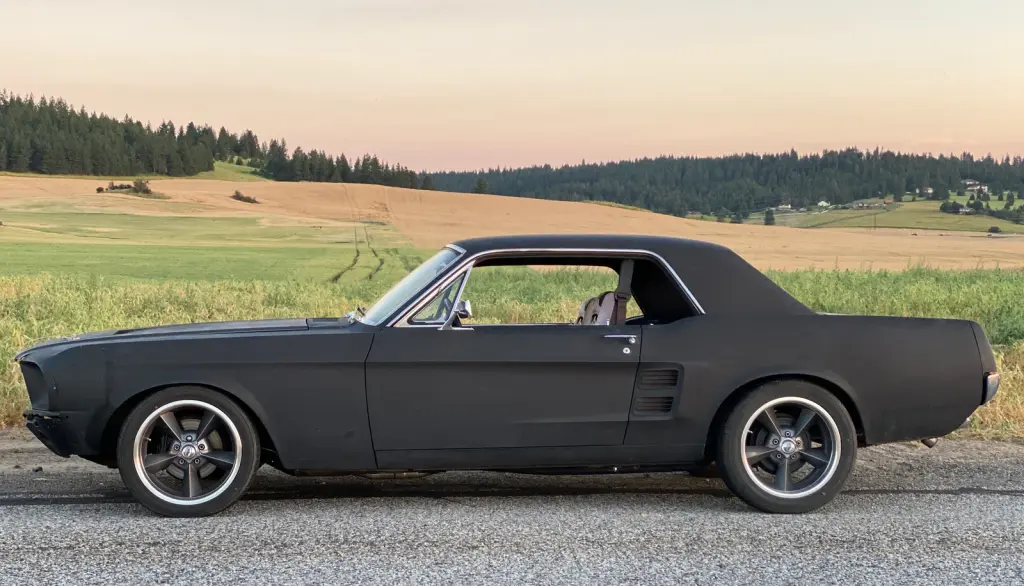
A 1967 Mustang Coupe Restomod With a Clear Mission: Build It, Improve It, Sell It
What happens when a classic Mustang becomes both a restoration project and a business challenge? The answer is a carefully planned restomod where every upgrade has to make sense.
When a Classic Car Becomes a Project With a Deadline
Classic Mustang projects can take many forms. Some are long-term restorations kept within the family, while others are built around a specific performance goal.
This 1967 Mustang Coupe represents another interesting approach: taking a partially finished classic, improving its mechanical and visual package, and preparing it for a new owner.
Instead of throwing money at every possible modification, a successful flip requires understanding what improvements buyers are likely to appreciate while keeping the project under control.
What Makes This Mustang Interesting?
The car already had a substantial collection of completed mechanical and chassis work before the exterior finishing stage began.
Starting With a Solid Foundation
According to the project details, the Mustang’s chassis had relatively low mileage and had been stored away before becoming part of the project.
The body retained its original Mustang metal in most areas, although the trunk was a reproduction component and several small metal repairs had been carried out.
More importantly, the floors, aprons and torque-box areas were described as original and free from rust.
A restomod can hide an impressive list of expensive components, but the quality of the underlying body and structure still matters. Starting with sound metal can make the difference between a manageable project and a financial nightmare.
A Mechanical Package That Was Already Well Underway
The Mustang was not simply an untouched shell waiting for a complete rebuild. A large amount of mechanical work had already been completed.
Braking System
The car received a modernized braking package featuring four-piston front disc brakes together with new supporting hardware and a new booster and master-cylinder arrangement.
Fuel System
New fuel-system components and a stainless-steel tank were part of the mechanical refurbishment.
Rear Axle
The original-style 8-inch rear axle had been rebuilt with a Traction-Lok differential and a 3.55 final-drive ratio.
Electrical System
A modern-generation Ford alternator and updated starter helped bring important electrical components into a more contemporary specification.
The 302 V8 Gives the Mustang Its Muscle
At the heart of the project is a modified 302-cubic-inch Ford V8. The engine uses a modest camshaft, upgraded heads with larger valves, roller rockers and an Edelbrock intake and carburetor combination.
Electronic ignition, shorty headers and a 2.5-inch exhaust system with an X-pipe further modernize the powertrain.
Building a Street-Friendly V8
The goal of a street-focused classic is not always maximum horsepower. A usable engine should offer reasonable drivability while retaining the character expected from an old-school V8.
Small-Cam Approach
A moderate camshaft can keep the engine more practical for street use while still providing an unmistakable performance character.
Improved Cylinder Heads
Larger valves and upgraded valvetrain components help support the engine’s performance goals.
Electronic Ignition
Electronic ignition can provide a more contemporary approach to engine management than the original points-style system.
Better Exhaust Flow
Shorty headers and a performance exhaust system complement the engine’s intake and combustion upgrades.
An Automatic With a Performance Twist
The Mustang uses a Ford AOD automatic transmission associated with later-generation Mustangs. Rather than leaving it completely stock, the transmission was built with a constant-pressure valve body and shift-kit modifications.
That combination is interesting for a classic-car project because it attempts to combine the convenience of an automatic with a more performance-oriented response.
Engine output, transmission behavior, rear-axle gearing and tire choice should all complement one another. A powerful engine is only part of the equation.
The Chassis Gets a Major Upgrade
The suspension package moves the Mustang significantly beyond its original street-car specification.
Shelby-Inspired Geometry
The front suspension incorporates a Shelby-style geometry modification intended to improve the car’s handling behavior.
Heim-Joint Components
Upgraded control-arm and strut-rod components replace some of the compliance associated with conventional rubber bushings.
Roller Spring Perches
Roller-bearing spring-perch components provide another modern touch within the front suspension.
Custom-Valved Shocks
Custom-valved Bilstein shocks were selected for the Mustang’s application.
A Lower, More Focused Stance
Lower-rate choices and revised spring configurations help give the Mustang a more aggressive stance while supporting the handling objectives of the restomod.
Welded subframe connectors are another important addition. They help tie the structure together and can be especially useful when a unibody classic receives additional performance hardware.
Chassis stiffness is easy to overlook because it is not as visually exciting as wheels or paint. However, structural improvements can provide a better foundation for suspension and performance upgrades.
Inside, the Mustang Is Almost Ready for Its Next Owner
The interior had also received substantial attention, with new carpet, new door panels and Corbeau seats contributing to the modernized cabin.
Safety and convenience upgrades were included as well, including a three-point shoulder belt for the driver.
Refreshed Interior
New interior trim and carpeting give the cabin a substantially more finished appearance.
Modern Seating
Performance-oriented seats bring a contemporary touch while supporting the restomod theme.
Improved Safety
Additional restraint equipment demonstrates how classic-car projects can incorporate selected modern safety features.
Updated Audio
A modern double-DIN entertainment system, upgraded speakers, amplification and a subwoofer were incorporated into the car.
The Biggest Visual Job Was Still Ahead
Mechanically, the Mustang had already received extensive attention. Visually, however, it was still wearing black spray-can primer when the project was being prepared for its next stage.
That made bodywork and paint the obvious next chapter.
A buyer sees the exterior before discovering the upgraded rear axle, suspension components or ignition system. The final presentation therefore needs to communicate the quality of the work underneath.
What Does It Take to Successfully Flip a Restomod?
Turning a classic project into a profitable sale is considerably more complicated than simply buying cheaply and selling high.
Start With the Right Car
A structurally sound vehicle can provide a much better starting point than a cheaper car requiring extensive metal replacement.
Understand the Existing Work
Determine what has already been completed before spending money on additional components.
Prioritize Buyer-Friendly Upgrades
Brakes, suspension, drivability, reliability and quality presentation can often be more meaningful than excessive customization.
Control the Budget
Every additional modification reduces the potential margin if the finished car cannot command a corresponding price.
Finish the Details
Paint quality, trim, alignment, cleanliness and documentation can strongly influence the final impression.
What a Potential Buyer Is Likely to Notice
Body Quality
Straight panels, clean gaps and properly finished paint can immediately establish confidence in the project.
Mechanical Evidence
Buyers want to understand what engine, transmission, brakes, suspension and rear axle are actually fitted.
Driving Experience
A restomod should ideally feel cohesive rather than like a collection of unrelated modifications.
Documentation
Receipts, photographs and records can help demonstrate the investment made in the vehicle.
The Bigger Lesson From This Mustang Project
A successful classic-car flip is fundamentally an exercise in decision-making.
The temptation is always there to add another performance component, another interior upgrade or another expensive detail. But the best project decisions are those that improve the car without pushing the finished vehicle beyond what its market can realistically support.
This 1967 Mustang demonstrates that concept particularly well because so much of the mechanical foundation was already addressed before the final cosmetic stage.
Start with a good foundation → improve the important systems → create a cohesive driving experience → finish the presentation → find the right buyer.
Frequently Asked Questions
What year Mustang is the project based on?
The project is based on a 1967 Ford Mustang Coupe.
What engine does the Mustang use?
The build uses a modified 302-cubic-inch Ford V8 with upgraded cylinder-head, valvetrain, intake, carburetion and exhaust components.
Does it have an automatic transmission?
Yes. The project uses a modified Ford AOD automatic transmission.
What type of suspension does it have?
The chassis features numerous upgraded suspension components, including performance control arms, custom-valved shocks, upgraded spring components and revised front-end geometry.
Why would someone build a classic car specifically to sell it?
A carefully planned restomod can combine automotive enthusiasm with a project-based business strategy. The challenge is keeping the investment and final specification aligned with buyer demand.
Can a 1967 Mustang Become the Perfect Restomod Flip?
The appeal of this Mustang project is that the car sits at the intersection of classic style, modern performance and business strategy.
The foundation is a recognizable 1960s Mustang, while the mechanical package brings in upgraded brakes, suspension, drivetrain components, electronics and a modified V8.
The final ingredient is presentation. Once the bodywork and paint are completed, the finished car can finally show buyers what all of the mechanical work underneath was designed to achieve.
For classic-car enthusiasts, projects like this are a reminder that the most interesting restomods are not necessarily the most expensive ones. Sometimes the smartest build is the one where every modification has a reason.
BLOG4CARS.COM — Classic cars, restomods, muscle cars and the stories behind automotive projects.
Join the conversation
Be the first to share your thoughts.
Leave a comment