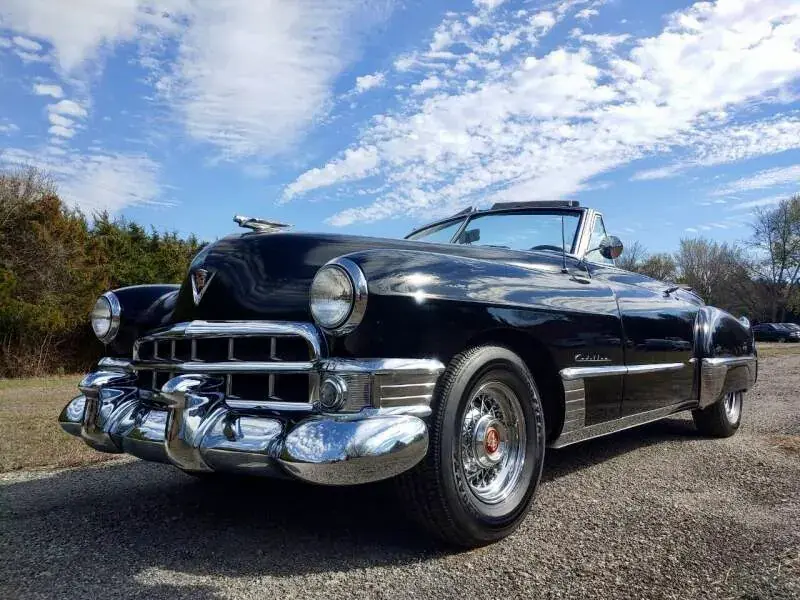
Meet the 1949 Cadillac Series 62 Convertible: A Classic With Big Restomod Plans
A beautifully preserved post-war Cadillac has joined a new collection, and its next chapter could transform this elegant cruiser into a dramatically more capable custom build.
A Long-Time Dream Finally Becomes Reality
Some classic cars are simply interesting. Others become the cars that enthusiasts remember for years before finally getting the opportunity to own one.
This 1949 Cadillac Series 62 Convertible falls firmly into the second category.
The car had been a long-standing favorite, and the opportunity to purchase a particularly solid example turned that long-time ambition into a real project.
This Cadillac was not purchased simply to sit in a collection. It already had a usable foundation, but there were ambitious plans to modernize the car while preserving its unmistakable 1949 identity.
The Cadillac at a Glance
The project starts with a genuine piece of post-war American luxury design and adds a very different vision for its future.
A Solid Driver Rather Than a Forgotten Project
The Cadillac arrived in surprisingly good condition for a car of its age. Rather than being a complete basket case requiring years of basic restoration work, it already had the qualities needed to be enjoyed while future modifications were being planned.
That makes the project particularly interesting. The owner could drive the car, understand its personality and gradually determine exactly what needed to change.
The car was also already equipped with a later-generation LT1 engine and an overdrive transmission, giving it a very different mechanical character from its factory configuration. :contentReference[oaicite:1]{index=1}
The Original Powertrain Wasn’t Lost
One fascinating detail is that the original-era Cadillac engine and transmission came with the car as part of the purchase.
That gives the project an unusual amount of flexibility. The owner has access to the historic powertrain while also being able to continue enjoying the advantages of a modernized drivetrain.
The original 331-cubic-inch overhead-valve V8 was an important development for Cadillac in 1949, marking a major change in the company’s engine technology. :contentReference[oaicite:2]{index=2}
The Restomod Plan Is Much Bigger Than an Engine Swap
The future of this Cadillac is not limited to replacing one engine with another. The proposed build takes aim at several areas of the vehicle at once.
Modern LS3 Power
The planned direction calls for replacing the existing LT1 with a fresh LS3 crate engine from GM Performance.
New Chassis
A purpose-built chassis is planned to provide a stronger foundation for the steering, suspension and braking systems.
Air Suspension
Adjustable air suspension is intended to provide a dramatic parked stance while maintaining a practical lowered height on the road.
Larger Wire Wheels
The original-style 15-inch wheels are planned to make way for larger 18-inch wire wheels.
Why the Chassis Upgrade Could Be the Biggest Change
Installing more power into a classic car is only part of the equation. The rest of the vehicle needs to be capable of using that power effectively.
Steering, braking, suspension geometry and chassis strength all influence how a classic performs when it moves beyond gentle cruising.
A properly engineered chassis upgrade can transform not only acceleration but also the confidence a driver feels when braking, cornering and cruising at modern road speeds.
Air Suspension Adds Two Different Personalities
Air suspension is one of the most visually dramatic additions planned for the Cadillac.
At a show or while parked, the vehicle can be lowered dramatically to create an aggressive custom stance. On the road, the ride height can be raised to something more practical.
Parked Stance
Lowering the Cadillac substantially gives it a distinctive custom-car appearance when sitting still.
Driving Height
Raising the vehicle to a sensible ride height can provide better practicality for normal road use.
Bigger Wire Wheels Will Change the Proportions
Wheels have an enormous influence on the visual character of a classic car.
The Cadillac already wears traditional wire-style wheels, but the planned move to larger 18-inch units should create a more contemporary interpretation of the original look.
Instead, larger wheels can make the car appear lower and more purposeful while keeping the distinctive wire-wheel theme intact.
Why This Cadillac Is Worth Preserving
Iconic Era
The 1949 model year sits at an important point in Cadillac’s transition into the modern post-war luxury era.
Convertible Body
The open-top Series 62 gives the car a presence that makes it particularly desirable among classic American vehicles.
Strong Foundation
Starting with a solid driver makes it possible to focus on refinement and modernization instead of rebuilding everything.
Huge Potential
The combination of classic styling and modern hardware creates a wide range of possibilities for a custom build.
Why Driving It Before the Big Build Makes Sense
One of the smartest aspects of the project is the decision to continue driving the Cadillac while the larger transformation is being planned.
Real road use reveals details that cannot be discovered while a car is sitting in a workshop.
Steering feel, braking response, ride quality, engine behavior and small reliability issues all become much easier to understand when the vehicle is being used regularly.
Spending time behind the wheel can help an owner identify what genuinely needs improvement and what should simply be left alone.
Even the Small Details Get Attention
Before the major chassis project begins, the Cadillac received a set of wide whitewall tires.
That might sound like a relatively small modification compared with an LS3 and a new chassis, but it illustrates how much personality can come from carefully selected details.
Whitewalls remain strongly associated with classic American luxury cars and complement the large body proportions of a late-1940s Cadillac.
This Is a Restomod With a Clear Identity
The project is not attempting to turn the Cadillac into a generic modern performance car.
Instead, the proposed changes are built around the original identity: classic Cadillac styling, wire wheels, a low stance and an unmistakable post-war luxury-car presence.
Modern power, suspension and chassis technology are being added around that identity rather than replacing it.
The best builds allow modern engineering to improve the experience without making the original vehicle impossible to recognize.
The Next Chapter Could Be Dramatic
For now, the Cadillac remains a classic that can be driven and enjoyed. But the proposed upgrades point toward a much more ambitious future.
Once the new chassis, LS3 power, air suspension and larger wheels are combined, the car should have a very different driving personality from the one it has today.
That contrast between the current driver-quality Cadillac and its eventual custom configuration is one of the most interesting reasons to follow a project like this.
What We Can Learn From This Build
A strong classic-car project often starts with restraint.
Instead of immediately dismantling a vehicle, the owner can spend time understanding its condition, driving it and deciding what kind of experience the finished car should provide.
In this case, the foundation is already good enough to enjoy, while the long-term plan gives the Cadillac an exciting direction.
Preserve the Shape
The unmistakable Cadillac silhouette remains the centerpiece.
Modernize the Mechanics
Modern power and chassis technology can improve usability.
Improve the Stance
Air suspension and larger wheels can create a stronger visual presence.
Keep Enjoying the Car
Driving the car along the way keeps the project connected to the reason it was purchased in the first place.
Frequently Asked Questions
What car is featured in this project?
It is a 1949 Cadillac Series 62 Convertible.
What engine does the Cadillac currently have?
The car is described as currently using a modern LT1 engine.
What engine is planned for the future?
The planned upgrade is an LS3 crate engine.
What suspension is planned?
The project plan calls for adjustable air suspension.
Will the original engine be kept?
The original 1949 Cadillac engine and transmission came with the car, giving the project flexibility for future decisions.
Why are larger wire wheels being considered?
Larger wire wheels can modernize the stance while retaining a design element that suits the Cadillac’s classic character.
A 1949 Cadillac With a Very Modern Future
The appeal of this Cadillac is not simply that it is an old convertible. It is the combination of a historically significant design, a solid starting point and a clearly defined modern vision.
The current car can already be enjoyed, but the proposed LS3 engine, new chassis, air suspension and larger wire wheels could eventually turn it into a completely different kind of machine.
And perhaps that is the best part of a project like this: the classic Cadillac remains recognizable, while the technology underneath moves several generations forward.
BLOG4CARS.COM — Classic cars, restorations, restomods and the automotive stories worth following.
Join the conversation
Be the first to share your thoughts.
Leave a comment