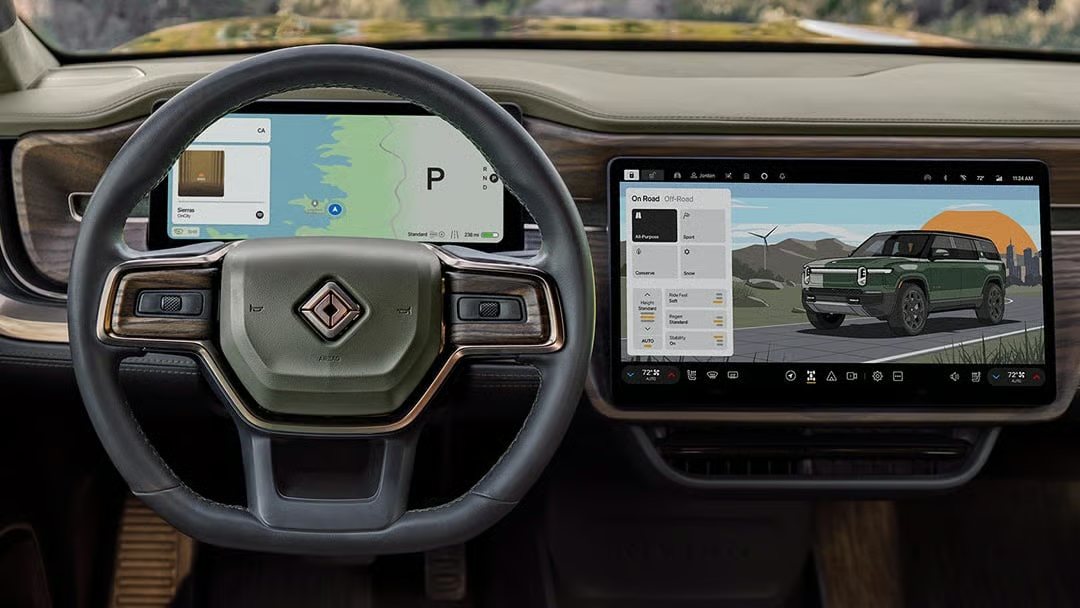
RivianOS 2 Is Coming to R1T and R1S With a Major Software Redesign
Rivian’s upcoming 2026.31 software update looks set to deliver one of the company’s most substantial interface changes yet, bringing its rebuilt operating experience to both generations of the R1 platform.
Rivian’s Vehicles Are Becoming Even More Software-Driven
Electric vehicles are increasingly defined by what happens after the vehicle leaves the factory. Software can change interfaces, add functions, improve existing systems and reshape the way drivers interact with the vehicle.
Rivian’s upcoming 2026.31 update is an especially interesting example. The release is associated with RivianOS 2, a rebuilt operating system designed to bring the R1 experience closer to the company’s newer software direction.
The update is expected to cover both Gen 1 and Gen 2 R1T and R1S vehicles. However, the published information is still preliminary and the update had not yet begun general distribution at the time of the supplied report. :contentReference[oaicite:1]{index=1}
A shared operating-system foundation does not mean every Rivian gets identical capabilities. Vehicle hardware still determines which advanced functions can actually operate.
2026.31 at a Glance
The upcoming update combines a visual redesign with changes across navigation, media, energy, connectivity and vehicle controls.
RivianOS 2 Changes the Way the R1 Cabin Feels
The new operating system is more than a simple collection of bug fixes. Rivian has been working toward a more unified software experience, with navigation, media, energy information and frequently used controls brought together through a redesigned interface.
The goal is a system that feels faster, cleaner and easier to understand rather than simply adding more buttons and menus.
A New Interface Built Around the Driver
One of the most noticeable changes is the reorganization of the information displayed on the center screen.
Vertical Status Information
The redesigned interface introduces a more vertical approach to status information, helping organize important vehicle details in a cleaner visual hierarchy.
Updated Media Experience
The Media application is being redesigned, with services including Apple Music and TIDAL incorporated into the new experience. :contentReference[oaicite:2]{index=2}
Better Information Density
Navigation, media and vehicle information can be presented in a way that reduces the need to constantly switch between different screens.
More Consistent Design
The software direction is intended to create a more cohesive experience across Rivian’s newer and existing vehicles.
Music and Media Get a More Important Role
Media controls are becoming increasingly important in modern vehicle interfaces because drivers often want access to entertainment without losing sight of navigation information.
Rivian’s new design places greater emphasis on keeping media controls accessible while driving.
A good vehicle interface is not simply about showing more information. It is about showing the right information in the right place without creating unnecessary distraction.
Weather Becomes Part of the Vehicle Experience
Another interesting addition is a dedicated weather experience, giving the vehicle a richer way to display current weather conditions and related information.
This is an example of how modern EV software can move beyond traditional dashboard information and become a broader digital environment for the driver.
Navigation Gets More Contextual Information
Navigation remains one of the most important functions inside an EV, but Rivian’s approach combines mapping with information specifically useful to electric-vehicle drivers.
Route Information
Drivers can continue to use route guidance while keeping important vehicle information accessible.
EV-Aware Planning
Charging and estimated arrival information remain important elements of the Rivian navigation experience.
Road Alerts
The 2026.31 update is also associated with Waze-style reports for items such as speed cameras and police locations. :contentReference[oaicite:3]{index=3}
Gen 1 Owners Are Not Being Left Behind
Perhaps the most important part of the update is that both generations of R1 vehicles are included.
That means owners of earlier R1T and R1S vehicles can receive the new software experience rather than being permanently locked into an older interface. :contentReference[oaicite:4]{index=4}
Software can provide the same interface framework across different vehicles, but it cannot magically add sensors, processors or other physical hardware that an older vehicle does not possess.
Don’t Confuse the New Interface With New Autonomy Hardware
This is an important point for R1 owners.
The new operating system can appear across both Gen 1 and Gen 2 vehicles, while advanced autonomy features remain dependent on the hardware installed in each vehicle generation.
In other words, receiving RivianOS 2 does not automatically turn an older R1 into a newer-generation autonomy platform. :contentReference[oaicite:5]{index=5}
Rivian Assistant Continues to Become More Useful
Voice-based vehicle assistants are becoming an increasingly important part of the connected-car experience.
The 2026.31 notes include improvements to Rivian Assistant, including better handling of spoken punctuation and broader weather-related questions. :contentReference[oaicite:6]{index=6}
That points toward a future where drivers can interact with the car more naturally instead of navigating menus for every small request.
Connectivity and Reliability Matter as Much as New Features
Software updates are not only about flashy new interfaces.
The published 2026.31 information also includes work on LTE and Wi-Fi reliability, connectivity status and low-voltage electrical-system recovery. :contentReference[oaicite:7]{index=7}
Connectivity
More reliable communication between the vehicle and connected services can make everyday features more dependable.
Recovery Behavior
Improvements to low-voltage fault recovery are designed to help the vehicle handle certain electrical issues more effectively.
EV Software Is Also About the Systems You Don’t See
Drivers naturally notice a redesigned screen first, but some of the most valuable improvements happen underneath the interface.
Battery management, charging behavior, connectivity and electrical system reliability can influence ownership far more than a visual redesign.
That is why a major software release should be judged on both presentation and the less visible engineering changes behind it.
Why 2026.31 Could Be Important for Rivian
One Software Direction
Rivian is moving toward a more unified software foundation across its vehicle lineup.
Longer-Term Support
Bringing the new experience to Gen 1 vehicles demonstrates that older R1 owners remain part of the software roadmap.
More Connected Features
Navigation, media, weather, connectivity and assistant functions are becoming increasingly integrated.
Software-Defined Vehicles
The update demonstrates how much of the ownership experience can continue evolving after a vehicle is delivered.
What R1 Owners Should Keep in Mind
The published release notes are preliminary and can change before software reaches customer vehicles. The original report specifically notes that the update had not yet begun distribution and that the notes may be revised. :contentReference[oaicite:8]{index=8}
Features described during previews or in preliminary notes should not automatically be treated as guaranteed final functionality for every vehicle configuration.
Rivian’s Bigger Software Strategy
Rivian’s approach highlights an important change in the automotive industry: the vehicle is increasingly becoming a software platform rather than a fixed product.
A vehicle delivered today can potentially receive new interfaces, improved assistants, navigation changes and system refinements years after it leaves the factory.
RivianOS 2 is therefore about more than a new screen design. It represents the company’s attempt to create a common digital foundation that can evolve alongside its expanding vehicle lineup.
Frequently Asked Questions
What is Rivian software update 2026.31?
It is an upcoming Rivian software release associated with the company’s redesigned RivianOS 2 experience.
Which Rivian vehicles are expected to receive it?
The published information indicates support for R1T and R1S vehicles across both Gen 1 and Gen 2.
Is RivianOS 2 only a visual redesign?
No. The update covers interface design as well as navigation, media, assistant, connectivity, battery and other vehicle-system improvements.
Will Gen 1 vehicles get every Gen 2 feature?
No. Software support can be shared, but features that depend on newer hardware remain limited by the vehicle’s physical capabilities.
Does 2026.31 include Waze-style alerts?
The update is associated with speed-camera and police-report alerts in navigation, with more alert categories expected to expand over time. :contentReference[oaicite:9]{index=9}
Has the update already started rolling out?
At the time of the supplied August 28, 2026 report, general distribution had not yet begun.
Rivian’s Next Big Upgrade Is Happening on the Screen
Rivian’s upcoming 2026.31 update shows how quickly vehicle software is becoming just as important as traditional mechanical development.
RivianOS 2 brings a redesigned experience, improved media and navigation features, expanded assistant capabilities, connectivity improvements and a range of behind-the-scenes refinements.
Most importantly, the new software direction is expected to reach both generations of the R1T and R1S, giving earlier owners a path into Rivian’s latest interface ecosystem.
The final test will not simply be whether the new interface looks better. It will be whether it makes the vehicle genuinely faster, clearer, more reliable and easier to use every day.
BLOG4CARS.COM — Cars, EVs, technology, software and the future of driving.
Join the conversation
Be the first to share your thoughts.
Leave a comment