Bruce McLaren’s M6GT Lives Again as a Neo-Retro Manual Supercar
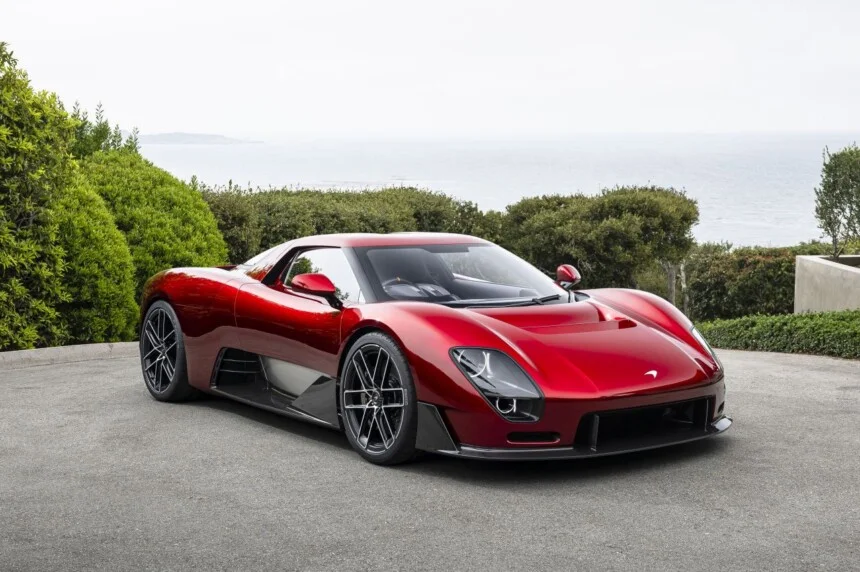
McLaren has brought one of Bruce McLaren’s most ambitious road-car ideas back to life with the McL 6GT, a modern supercar built around analogue driving, carbon-fibre construction and a genuine manual gearbox.
A Forgotten McLaren Idea Returns
Some automotive ideas disappear because they were bad. Others disappear simply because the timing was wrong.
Bruce McLaren’s original M6GT belongs firmly in the second category.
The M6GT was conceived as Bruce McLaren’s vision of a road-going supercar based on the company’s racing experience. The project never reached full production.
More than five decades later, McLaren has created a modern interpretation of that idea called the McL 6GT.
The Story Starts With Bruce McLaren
Bruce McLaren was not only a racing driver. He was also an engineer, designer and the founder of the company that would eventually become one of the world’s most respected performance-car manufacturers.
His M6GT project was an attempt to take McLaren’s racing knowledge and create a road car that could be used outside the racetrack.
The original project was never completed as a production model, making the new McL 6GT a particularly personal piece of McLaren history.
What Was the Original M6GT?
The original M6GT grew from McLaren’s Can-Am racing experience and Bruce McLaren’s desire to build a road-going performance car.
Bruce himself used an M6GT-based road car, demonstrating how serious the project was as a personal vision for the future of McLaren.
The modern McL 6GT takes inspiration from that unfinished chapter and translates its basic philosophy into a contemporary supercar.
Meet the McLaren McL 6GT
The new McL 6GT is designed to feel very different from the technology-heavy supercars that dominate today’s market.
McLaren has focused heavily on the relationship between the driver and the machine.
The concept combines a V8 internal-combustion engine, rear-wheel drive and a genuine manual transmission.
“Modern performance does not always have to mean removing the driver from the experience.”
The Manual Gearbox Is the Big Story
The most surprising feature of the McL 6GT is its transmission.
McLaren has confirmed that the car uses an authentic manual transmission driving the rear wheels.
That makes the McL 6GT the first manual McLaren road car since the legendary F1.
Three Pedals
The driver controls the clutch, throttle and brake rather than allowing an automated gearbox to make every shift.
Six-Speed Manual
The new car uses a six-speed manual gearbox designed around mechanical driver involvement.
Rear-Wheel Drive
Power is sent to the rear wheels, keeping the layout focused on traditional sports-car dynamics.
Physical Connection
Gear changes become part of the driving experience rather than something handled entirely by software.
Lightweight Carbon-Fibre Construction
The McL 6GT follows an important McLaren tradition by using carbon-fibre construction.
McLaren says the concept uses a carbon-fibre monocoque together with carbon-fibre bodywork.
The objective is not simply to make a powerful car. The lightweight structure is intended to help create a more direct relationship between the driver, chassis and road.
Hydraulic Steering Makes a Comeback
McLaren has also chosen hydraulic steering for the McL 6GT.
Most modern performance cars have moved toward electrically assisted steering because of efficiency, packaging and driver-assistance requirements.
Hydraulic steering, however, can provide a more traditional steering feel and stronger mechanical character.
Traditional Feel
Hydraulic assistance has long been associated with natural steering feedback in enthusiast cars.
Driver Focus
The system fits the McL 6GT’s wider philosophy of keeping physical interaction at the centre of the driving experience.
A Very Different McLaren Design
The McL 6GT does not look like a conventional modern McLaren.
Its design takes clear inspiration from the original M6GT, but the shapes have been developed using modern aerodynamic thinking.
The result is a low, wide supercar with a long roofline and a distinctive rear section.
M6GT Inspiration
The proportions and overall character connect the new car directly to Bruce McLaren’s original project.
Modern Aerodynamics
Modern aerodynamic development gives the design a purpose beyond simple nostalgia.
Kamm-Style Rear
The rear treatment reflects the shape language of classic performance cars while remaining distinctly modern.
Low-Drag Philosophy
The body has been shaped with aerodynamic efficiency and stability in mind.
The Details Tell the Story
McLaren has filled the McL 6GT with small details that connect the modern car to its founder.
Bruce McLaren’s Signature
His signature appears in the engine area as a personal connection to the car’s heritage.
Speedy Kiwi
The Speedy Kiwi emblem appears on important details, reflecting Bruce McLaren’s New Zealand heritage.
Mechanical Gear Lever
The gear lever has been designed to make shifting a physical part of the experience.
Tactile Switchgear
Physical controls and textured metal details reinforce the analogue character of the car.
Inside: Digital Where Useful, Physical Where It Matters
The McL 6GT does not completely reject modern technology.
Instead, McLaren has combined digital instrumentation with physical controls and tactile materials.
This creates a cabin that can still provide modern information while avoiding the feeling of sitting inside a large touchscreen.
McL 6GT: What Has Been Confirmed?
| Feature | Confirmed Information |
|---|---|
| Model | McLaren McL 6GT |
| Inspiration | Bruce McLaren’s M6GT |
| Engine | V8 internal-combustion engine |
| Transmission | Authentic manual gearbox |
| Gears | Six-speed manual |
| Drive | Rear-wheel drive |
| Chassis | Carbon-fibre monocoque |
| Body | Carbon-fibre construction |
| Steering | Hydraulic assistance |
| Production | Production version planned for 2028 |
| Official Power Figure | Not yet released |
| Official Weight | Not yet released |
| Official Price | Not yet released |
Why Does a Manual Supercar Matter?
Modern automatic transmissions are extremely fast. In many cases, they can change gears faster than a human driver.
So why would McLaren deliberately choose a manual gearbox?
Because the McL 6GT is not designed purely around acceleration numbers.
The goal is to make every part of driving more involving.
More Driver Control
The driver decides when to change gear and how to use the engine’s performance.
More Mechanical Feedback
The clutch and gear lever add physical actions that modern automated cars remove.
More Character
Every gear change becomes part of the personality of the car.
More Connection
The driver becomes an active part of the performance rather than simply managing an electronic system.
This Is More Than a Retro Design Exercise
It would be easy to describe the McL 6GT as simply a nostalgic tribute to Bruce McLaren.
But the mechanical specification tells a different story.
Carbon-fibre construction, a V8, rear-wheel drive, hydraulic steering and a manual gearbox create a coherent engineering philosophy.
The car is designed around driver involvement from the beginning.
When Will the McL 6GT Arrive?
McLaren has indicated that a production version is planned for 2028.
The car is being positioned as a highly exclusive model outside McLaren’s normal core range.
McLaren has not released every production detail yet, including final pricing and the exact production volume.
Why the McL 6GT Could Become a Collector Favourite
Bruce McLaren Heritage
The car directly connects to an unfinished project created during the company’s earliest road-car ambitions.
Manual Transmission
A genuine manual gearbox makes the car unusual among modern high-performance McLarens.
Carbon-Fibre Construction
Lightweight carbon-fibre engineering remains central to McLaren’s performance philosophy.
Limited Availability
Its position as a highly exclusive model could make it particularly attractive to serious collectors.
The Return of the Analogue Supercar
The McL 6GT arrives at an interesting time for the performance-car industry.
Hybrid systems, electric motors, computer-controlled transmissions and advanced driver assistance have transformed modern supercars.
At the same time, a small but important group of enthusiasts wants something different.
They want cars that allow them to participate in the experience.
The McL 6GT is clearly aimed at that audience.
McL 6GT: Five Things to Remember
01 — Inspired by the M6GT
The new car brings Bruce McLaren’s unfinished road-car vision into the modern era.
02 — Real Manual
It uses an authentic six-speed manual transmission.
03 — V8 Power
McLaren confirms a V8 internal-combustion engine with rear-wheel drive.
04 — Carbon Fibre
Carbon-fibre construction is central to the lightweight performance philosophy.
05 — 2028
A production version is planned for 2028.
Frequently Asked Questions
What is the McLaren McL 6GT?
It is a new McLaren supercar concept inspired by Bruce McLaren’s original M6GT road-car project.
Does the McL 6GT have a manual gearbox?
Yes. McLaren has confirmed an authentic six-speed manual transmission.
What engine does the McL 6GT use?
McLaren confirms a V8 internal-combustion engine. The company has not yet released every final performance specification.
Is the McL 6GT hybrid?
The current concept specification describes a V8 internal- combustion powertrain with rear-wheel drive, without a hybrid system being announced.
When will the McL 6GT be produced?
McLaren has indicated that a production version is planned for 2028.
Why is the McL 6GT important?
It reconnects modern McLaren with Bruce McLaren’s unfinished M6GT vision while bringing back a genuine manual driving experience.
McLaren Is Bringing the Driver Back Into the Supercar
The McL 6GT is one of the most interesting McLaren projects in years because it is not obsessed with making every part of the car faster, more digital or more automated.
Instead, it focuses on something much simpler: making the driver feel involved.
A V8, rear-wheel drive, carbon-fibre construction, hydraulic steering and a real manual gearbox give the McL 6GT a character that is becoming increasingly rare.
More importantly, the car reconnects McLaren with the unfinished dream of its founder, Bruce McLaren.
If the production version stays true to this philosophy, the McL 6GT could become one of the most memorable analogue supercars of its era.
Join the conversation
Be the first to share your thoughts.
Leave a comment